Death row inmate seeks order against execution based on paralysis
Aug 12, 2026 | 5:55 pm ET
Description
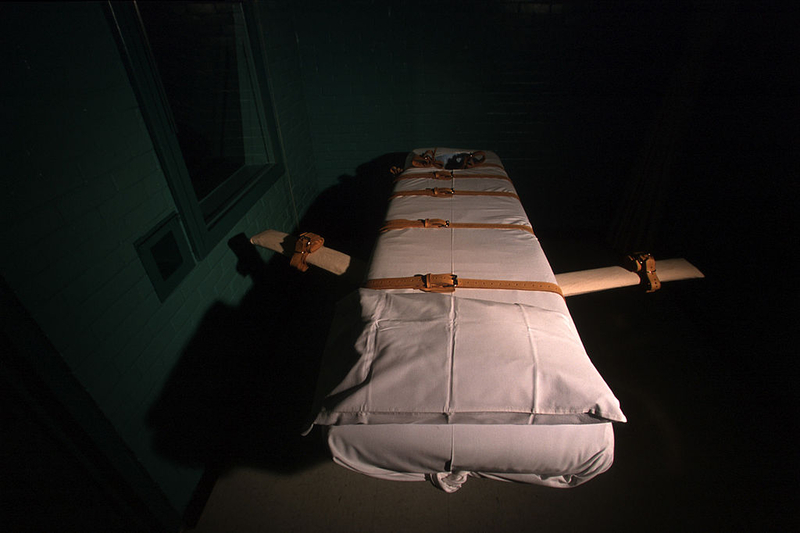
Attorneys for Darrell Hines, set to be executed Thursday by the State of Tennessee, have said his physical condition may render him incapable of going through the lethal injection protocol. (Photo by Joe Raedle/Newsmakers)
Attorneys for a Tennessee death row inmate filed a request Wednesday to stop his execution, saying the man could be physically incapable of going through the state’s lethal injection protocol.
Darrell Hines’ legal counsel filed motions in U.S. District Court for a temporary restraining order or preliminary injunction to prevent him from being executed, based on his condition, mainly rigidity in his left arm, after suffering two strokes in December and January.
The filing seeks to forbid the state from “attempting to forcibly straighten Mr. Hines’ stroke-affected left arm or unclench his left fist for the purposes of his execution.” Hines is paralyzed and partially blind on his left side following the strokes and unable to unclench his left fist or extend his left arm, according to his attorneys. In a last-minute order, U.S. District Court Judge Waverly Crenshaw declined to issue an injunction after the state agreed not to try to unclench Hines’ left fist.
Tennessee’s execution protocol requires members of the Department of Correction restraint team to “secure the inmate’s arms to arm extensions on the gurney,” according to the filing, which contends Hines is “sure or very likely to experience severe pain and suffering” if his arm is straightened.
“A feasible, readily available alternative … exists that would completely eliminate the risk of Mr. Hines’ experiencing severe pain and suffering due to TDOC’s forcible extension of his left arm – namely allowing Mr. Hines to be strapped to the gurney with his left arm at his side and placing the peripheral IV-lines in his non-stroke-affected limbs,” the complaint says.
The filing says “spasticity and pain” in Hines’ left arm should have been evident to medical personnel in the Riverbend Maximum Security Institution infirmary where he has been housed since the second stroke in January. The filing also includes a declaration by Dr. Gail Van Norman, a cardiothoracic anesthesiologist, who determined the rigidity in his arm will likely make it more difficult to insert a needle and establish an IV for the lethal drugs.
Attorneys for Hines, who was convicted of first-degree murder in the 1986 stabbing death of motel maid Catherine Jean Jenkins in Kingston Springs, also asked the U.S. Supreme Court to intervene in the case, claiming he could suffer cruel and unusual punishment, a violation of his Eighth Amendment rights, because of an “under-skilled” physician. The attorneys argue that the doctor likely to oversee the execution is unqualified to insert the IV to administer the lethal drugs after botching the execution of death row inmate Tony Carruthers in May.
- August 13, 20268:35 amThis story has been updated to reflect a judge's decision not to issue an injunction after the state Department of Correction agreed not to try to unclench Hines' fist.

Nashville, TN