Cyclosporiasis cases continue to rise, as Michigan remains hardest hit state
Jul 24, 2026 | 3:50 pm ET
Description
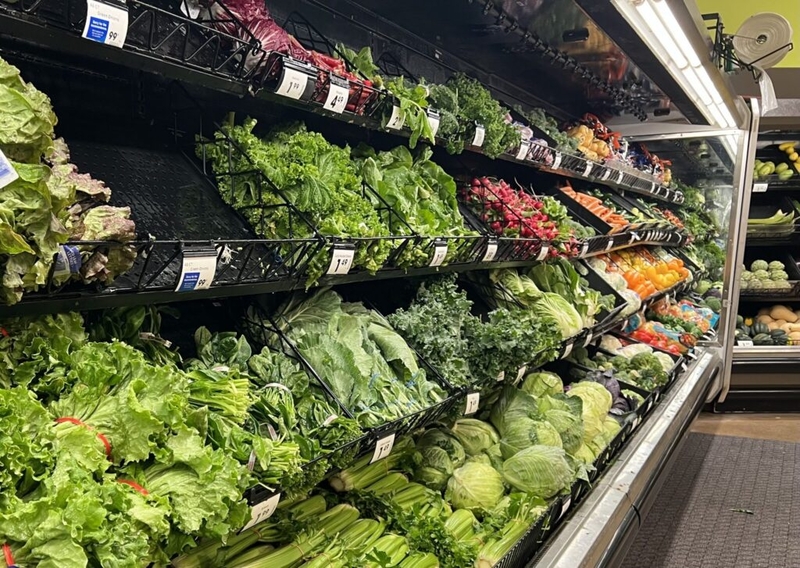
Vegetables and lettuces at a grocery store in Michigan. Michigan health officials say lettuces and salad greens are emerging as a likely source in the nationwide cyclosporiasis outbreak, which has sickened thousands of people across the country. (Photo by Jon King/Michigan Advance)
Michigan has documented 8,176 cases of cyclosporiasis, according to the Department of Health and Human Services, marking a significant increase from the 5,002 cases it reported last Friday.
The department is issuing daily updates on the number of documented cases with weekly updates on Thursdays on the number of cases resulting in hospitalization, as well as the number of cases recorded in each of Michigan’s 83 counties.
A total of 160 individuals have been hospitalized due to cyclosporiasis, up from 102 reported last Thursday.
Cyclosporiasis has been detected in 71 counties, though 16 reported cases do not have a known county of residence. Wayne, Washtenaw, Oakland, Ingham and Shiawassee counties have the highest number of reported cases.
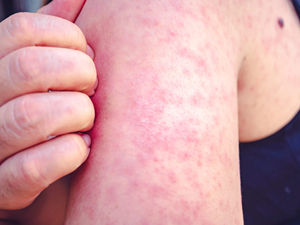
The state health department announced on July 1 that it was investigating an outbreak into the illness, which is caused by the microscopic Cyclospora parasite, spread through consuming contaminated food or water. Symptoms can emerge between two days and two weeks, and include watery diarrhea, loss of appetite, weight loss, cramping, bloating, increased gas, nausea, and fatigue.
As of Friday, the state’s investigation pointed to lettuce and salad greens as a potential source of this outbreak, though it could not completely rule out other types of produce, or identify a specific grower or supplier as a source of the outbreak.
On July 17, Taylor Farms De Mexico issued a voluntary recall on iceberg lettuce products sourced from central Mexico. On Friday, the U.S. Food and Drug Administration said it is continuing its investigation into infections linked to iceberg lettuce from the region alongside with the Centers for Disease Control and Prevention and state and local health departments.
As of Friday, the outbreak includes nine states: Illinois, Indiana, Kansas, Kentucky, Michigan, Ohio, Oklahoma, Pennsylvania and West Virginia.
The CDC is issuing weekly updates on cyclosporiasis cases, documenting 4,173 cases as of June 20, with 7,400 cases – mostly stemming from Michigan and Ohio – yet to be confirmed through laboratory testing.
The federal agency notes its reports do not include probable cases, which may result in lower case counts than those reported by state health departments.
Michigan remains the hardest hit state, with the CDC recording between 901 and 2,100 cases.
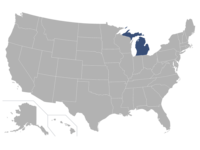
Lansing, MI