CVS announces breakup, but its Ohio skeptics say it’s incomplete
Nov 11, 2026 | 3:55 am ET
Description
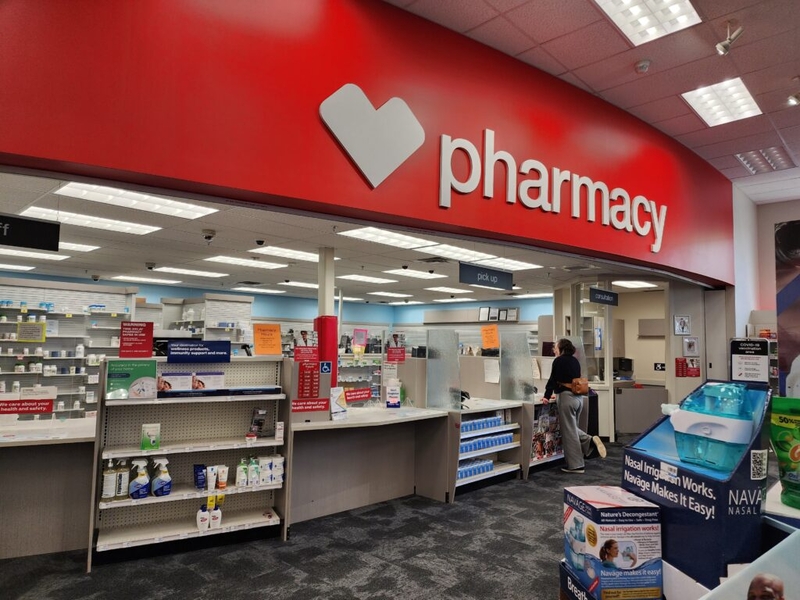
A CVS store. Photo by Lynne Terry, Oregon Capital Chronicle, States Newsroom.
With a big Democratic majority about to take control of Congress — and amid calls to “break up big medicine” — healthcare giant CVS last week announced that it was splitting itself up. The announcement follows a controversial history of CVS activity in Ohio.
The company said the resulting two companies — CVS Health and CVS Pharmacy — would be more focused and would provide better experiences for its customers as it also provides “more affordability, greater access, and a simpler experience,” President and CEO David Joyner said in a written statement. The split is expected to be complete in 2028.
However, the details of the deal show that the breakup doesn’t address what critics see as a core conflict that could be making medicine more expensive.
Instead, it might be more accurately seen as separating the more valuable parts of CVS’s sprawling enterprise from those that are worth less, said Antonio Ciaccia, a Columbus-based drug pricing expert. But, he said, it’s still progress.
“CVS just scraped the cream off the top of their business and then cut the dead weight,” he said in a post on X. “That doesn’t mean that the move isn’t important or healthy progress. It is. But… This isn’t ‘breaking up big medicine.’ It’s clinging to big medicine and unloading the leftovers.”
The seventh largest corporation by revenue, CVS Health is a huge player in multiple sectors of healthcare.
It owns the nation’s largest brick-and-mortar retail chain, and it owns a pharmacy middleman which handles nearly a third of drug transactions. That includes negotiating with drugmakers, contracting with its own and competitors’ pharmacies and billing its own and competing insurance companies.
It also owns Aetna, the nation’s third-largest insurer, Oak Street Health, which owns 900 primary-care providers, and other operations.
If it’s approved, the breakup announced last week will place all the retail and mail-order pharmacies, as well as CVS Minute Clinics, into one corporation called CVS Pharmacy.
The drug middleman, known as CVS Caremark, Aetna, and Oak Street Health will go into a separate, publicly traded company that, at least initially, will be called CVS Health.
“Both companies will continue to advance innovative technology solutions to improve the healthcare experience as we deliver on our purpose to simplify healthcare, one person, one family and one community at a time,” Joyner, the CEO, said.
But the way the resulting companies are grouped gives away the game, Ciaccia said.
Like most others, CVS’s retail operation has been lagging, with the company closing 900 locations between 2021 and 2024. Walgreens has been bought out by a private equity group and is closing some of its stores, and Rite Aid declared bankruptcy twice before closing all of its stores last year.
But not all of CVS’s drug-selling operations will go with CVS Pharmacy. CVS Specialty will remain with the lucrative middleman and insurance operations.
Specialty drugs are usually the most expensive. They treat complex diseases like cancer, rheumatoid arthritis and multiple sclerosis.
They’re also highly profitable. Analysis by Nephron Research found that in 2023 the sale of specialty drugs accounted for 39% of the profitability of huge drug middlemen — or pharmacy benefit managers — such as CVS Caremark.
“Specialty is now the largest PBM profit pool,” Nephron reported.
Ciaccia pointed out that there are no fixed definitions of what is or is not a specialty drug.
The big middlemen decide that and then they appear to price the products accordingly. In 2022, for example, middlemen charged employers $16,000 for 180 units of the generic multiple sclerosis drug Tecfidera. Meanwhile Mark Cuban’s Cost Plus Drugs charged $162 for the same prescription in a transaction that cut out insurance and PBMs.
Not only do some critics see CVS as cherrypicking its most profitable operations for one of the successor companies. They also say that the split maintains the same conflict-ridden relationships that exist now.
In early 2025, the American Economic Liberties Project announced its initiative to break up big medicine.
It argues that there is an inherent conflict when the same company owns a health insurer and a health provider such as a doctors office or a pharmacy. Such arrangements give conglomerates incentives to favor their own business over their competitors, and that drivers up health costs, the argument goes.
Even so, the CVS split would keep payers such as Aetna and CVS Caremark under the same umbrella as providers such as CVS Specialty and Oak Street Health.
The American Economic Liberties Project last week said the CVS breakup appeared to be an attempt to stave off a forced split that would be more meaningful to consumers.
“CVS is breaking itself up, but, as @freer_emma warns in Modern Healthcare, this is the company’s attempt to deter actual reforms,” it said in a post on X.
However, Ciaccia said, the breakup does eliminate some conflicts.
Starting around 2016, Ohio’s independent pharmacists started to see big drops in reimbursements from the big three pharmacy middlemen — including CVS Caremark.
CVS denied that it was favoring its own pharmacies over its competitors, but the independents in late 2017 started getting letters from the company. They made it seem that the CVS acquisition operation knew that the middleman operation was underpaying independent pharmacists.
“Ever wonder what your pharmacy business is worth? If so, we should talk,” the letter from Shane Stockton, CVS’s regional director of acquisitions, began.
“I’m a pharmacist myself. I know what independents are experiencing right now: declining reimbursements, increasing costs, a more complex regulatory environment,” Stockton continued. “Mounting challenges like these make selling your store to CVS Pharmacy an attractive and practical option.”
Many did sell to CVS, which usually closed the pharmacies and moved their prescription files to existing CVS stores. Then CVS closed many of those stores as well.
That and other forces have taken a toll on pharmacy access in Ohio. The number of pharmacies has dropped by 455 — or 21% — from a peak of 2,211 in 2015, according to a database maintained by the Ohio Board of Pharmacy.
Ciaccia, who represented the Ohio Pharmacists Association in 2017, said many of those losses are likely attributable to the fact that CVS was deciding how much to pay its own pharmacies and those of its competitors. That arrangement apparently will be a thing of the past.
“If you would have asked me back then, could this lead to the divestiture of 9,000 pharmacies or 9,000 conflicts of interest… It is a massive step in the direction of breaking up big medicine,” he said.
Columbus, OH