Cook Inlet’s gas shortage has become Fairbanks’ diesel bill
Oct 21, 2026 | 7:35 pm ET
Description
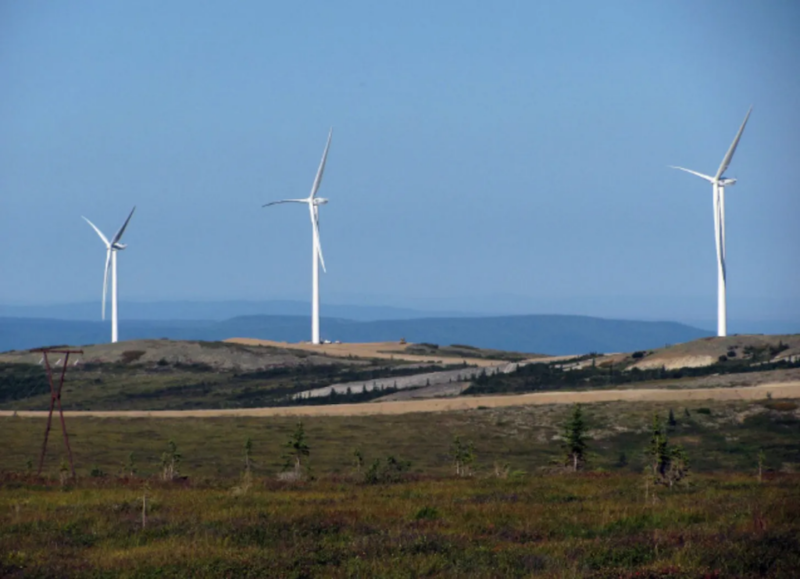
Golden Valley Electric Association’s Eva Creek wind project is near Healy. (Alaska Energy Authority photo)
On October 12, Golden Valley Electric Association asked its cooperative members to conserve electricity and prepare for possible controlled power outages. Scheduled maintenance, compounded by an unexpected shutdown of a unit at its North Pole Power Plant, had left the utility running all remaining available generation with very little reserve.
Coming just before winter, after a summer when residential electricity rates climbed above 37 cents per kilowatt-hour, the warning spooked many Interior residents. Paying high bills is one thing. Wondering whether the lights and heat will stay on as temperatures fall is another.
But the warning also raised a question: Aren’t we connected to a larger, regional transmission system called the Railbelt Grid? Then why does a shortage of available generation in Fairbanks leave us feeling like an electrical island?
The Alaska Intertie was built in the 1980s to connect the Interior to Southcentral utilities. Public money funded that connection so utilities could share lower-cost electricity, including power from the state-owned Bradley Lake Hydroelectric Project and gas-fired generation from Cook Inlet. But the intertie also serves another function—it helps stabilize the entire grid and allows utilities to support one another in an emergency. It was called the Alaska Intertie for a reason. Its benefits were meant to extend beyond any one utility’s territory.
So when a potential shortfall emerges, as it did last week, shouldn’t we be able to draw on available power elsewhere on the system? And when we can’t, what stands in the way?
Cook Inlet’s gas shortage has become Fairbanks’ diesel bill
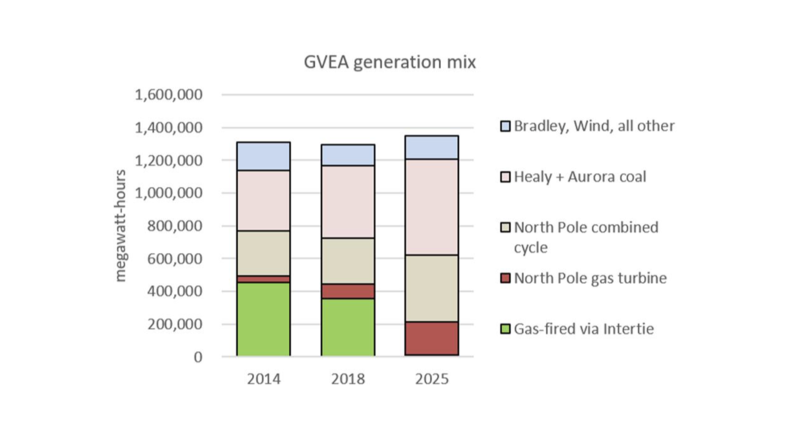
That question reaches beyond a few days of strained operations. Cook Inlet’s gas shortage has sharply curtailed the amount of electricity moving north. In 2014, the intertie carried roughly 540,000 megawatt-hours—an amount equivalent to more than 40% of GVEA’s annual electricity sales. Most was gas-fired economy power purchased from Southcentral utilities. But since early 2025, those economy-power purchases have fallen to essentially zero.
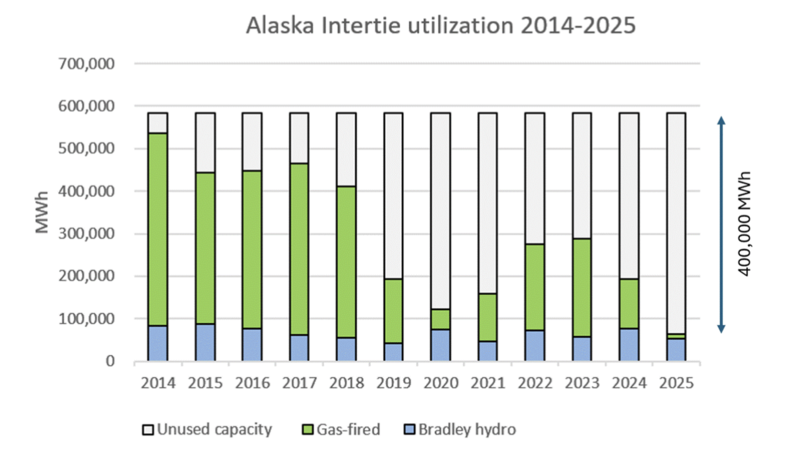
That leaves GVEA meeting its everyday electricity needs largely with local generation, supplemented by its share of Bradley Lake hydropower. Coal supplies about 40% of its electricity, while wind contributes a small share. Much of the rest comes from two liquid petroleum fuels, both produced at Petro Star’s refinery in North Pole: lower-cost naphtha, burned in GVEA’s more efficient LM6000 combined-cycle plant, and more expensive diesel, used in its older turbines and generators.
GVEA has been trying to kick its expensive diesel habit for years. For a while, it was making real progress: in 2014, the older diesel-fired turbines at North Pole supplied only about 3% of its electricity. Lower-cost imports and the addition of the LM6000 helped keep those units largely in reserve. But when gas-fired economy power from Southcentral dried up, GVEA relapsed. By 2025, those diesel turbines were supplying 15% of its electricity.
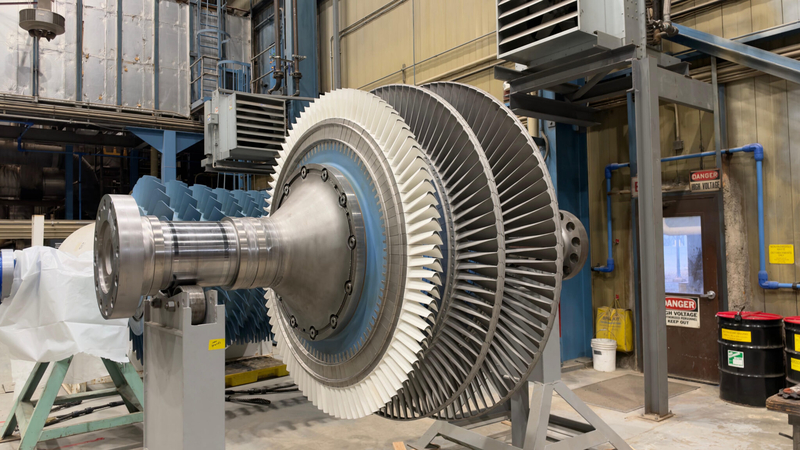
This has left us more exposed to diesel prices just as prices have spiked due to the war in Iran. That double whammy—the loss of lower-cost imports and rising diesel prices—largely explains the steep increase in Fairbanks’ residential rates. Today, residents pay about 50% more per kilowatt-hour than Southcentral customers and more than three times as much as those in largely hydropower-based Juneau.
GVEA members are even paying more than most residential customers in rural Alaska, where diesel dependence has traditionally made electricity especially expensive. The state’s Power Cost Equalization program was created decades ago to bring electricity costs for eligible rural household usage closer to those in Anchorage, Fairbanks and Juneau. The irony is that Fairbanks, one of those benchmarks for affordability, now has a residential rate about 10 cents per kilowatt-hour, or 40%, above the average PCE-adjusted rate reported for 2025. This is perhaps less surprising when one considers the scale of GVEA’s diesel dependence: last winter, its daily diesel consumption for power generation averaged more than three times that of all of rural Alaska combined.
Cook Inlet’s gas shortage has become Fairbanks’ diesel bill. But is that really fair?
Who benefits from publicly supported gas?
We don’t often think of Cook Inlet gas as a state-supported energy resource. That’s because private companies produce the basin’s oil and gas. However, the State of Alaska has consistently helped keep that resource flowing through cashable tax credits, favorable production tax treatment, royalty relief and public financing.
This support amounts to no small potatoes. The Department of Revenue reported Alaska paid $1.3 billion in cash to purchase tax credits for “non-North-Slope oil and gas activities” through 2021.
The Interior used to share in the benefits of these state investments through economy power purchases sent up the intertie. But with gas now scarce, the spigot to Fairbanks has been cut off. Southcentral utilities are understandably putting their own customers first. That is their responsibility. But an understandable outcome is not necessarily an equitable one, given the public investments that helped make those resources available. We cannot expect individual utilities alone to resolve complex policy questions about how publicly supported resources should be shared. That will require political leadership. Without it, meaningful near-term rate relief for the Interior is difficult to see. In the meantime, prolonged high energy costs threaten not only household budgets, but the broader Interior economy.
Fill the line
There are no quick or simple answers to these issues, but there are actionable steps we can take. GVEA’s precarious position means it stands to gain significantly from greater resource sharing and a stronger regional system. GVEA should be the utility that keeps knocking on doors—of other utilities, legislators, suppliers and a new governor—to bring everyone to the table. With so much at stake for its members, it should be both the most persistent advocate for regional solutions and a leader in making them happen.
A big part of that is figuring out how to put the intertie back to work, both now and over the longer term. GVEA should adopt a new mantra: fill the line. The nice thing about a transmission line is that it doesn’t care how the electricity is generated. Whether the power comes from imported gas, gas delivered through a North Slope pipeline, coal, new hydro projects, the waste-to-energy project Anchorage has been pursuing, or even advanced nuclear, a stronger regional grid would help us develop the best resources wherever they are located and share the benefits across the Railbelt. No one has a crystal ball, but today’s scarcity should not define the limits of our ambition or our imagination.
In the meantime, GVEA can begin taking some practical steps toward regional solutions. One would be pursuing membership in the tight power pool through which Matanuska Electric Association and Chugach Electric Association coordinate their generation. Operating since April 2021, the pool allows the two utilities to select the least costly combination of available generation to meet their combined demand, rather than each relying on its own plants first. They retain their separate identities while sharing the benefits of operating more efficiently together. According to a recent presentation by MEA’s Julie Estey, that cooperation saves their customers approximately $6 million to $7 million a year—a substantial benefit from working together.
The published pooling agreement already anticipates GVEA joining someday, but its protections for existing participants mean that GVEA membership would need to benefit them, too. That may be difficult to demonstrate under current conditions. Yet GVEA’s plight, coupled with the broader question of equitable access to publicly supported energy resources, makes a case for negotiating beyond those existing terms. It will be a difficult conversation, but GVEA should be identifying the barriers, proposing solutions and seeking the political support needed to move forward now.
A stronger regional system would give all of us more options, greater reliability and access to affordable power. Today, Fairbanks is struggling; tomorrow, another part of the Railbelt could need help. Every utility has something to gain from making better use of our shared resources. Our market is too small to keep planning and investing as though each utility were an electrical island. We built the intertie to connect us. Now we need to make that connection work for all of us.
Juneau