Constitutional: The amendment that could safeguard same-sex marriage in Virginia
Oct 08, 2026 | 5:28 am ET
Description
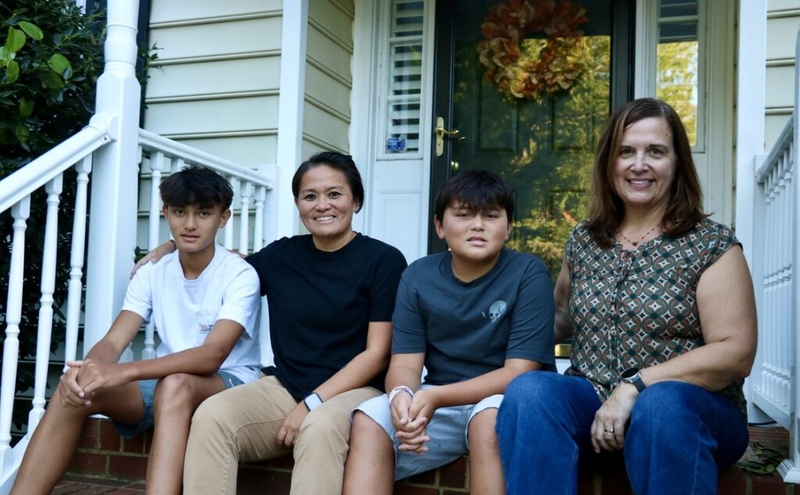
Rachey Leyco and Jenn Jackson sit on the porch of their Chesterfield County home with their sons in the summer of 2026. (Photo by Charlotte Rene Woods/Virginia Mercury)
Rachel Leyco had to adopt her biological sons.
As she and her wife Jenn Jackson sat in their Chesterfield County living room recently, the couple recalled how their marriage and parenthood journey was complicated by state and federal legal landscapes. Their love story is why they are backing an effort to enshrine same-sex marriage protections into Virginia’s constitution.
“When I tell people I literally had to adopt my genetic children, they’re like ‘what!’” Leyco said.
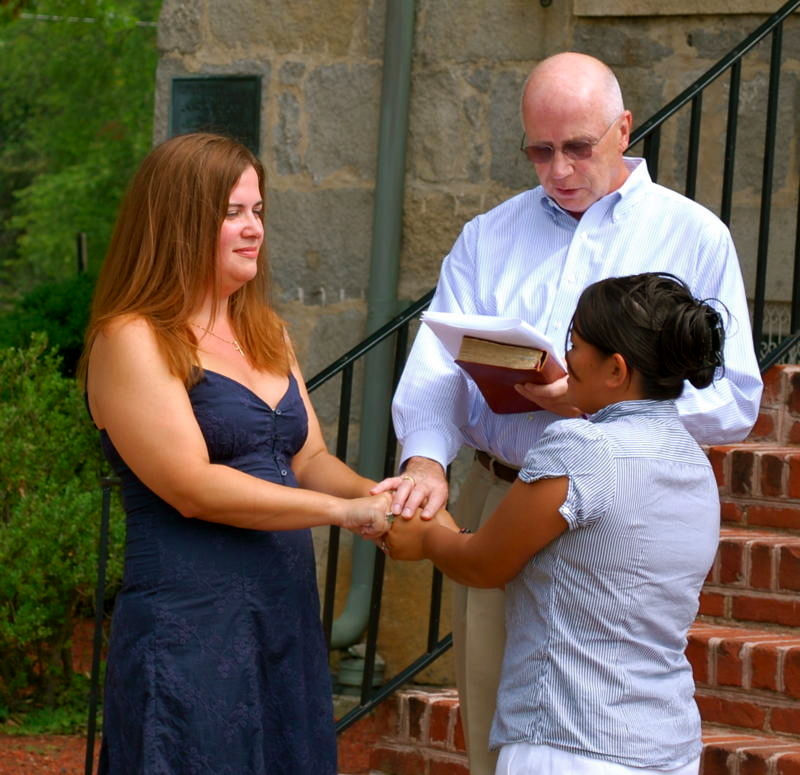
The couple first met in 2009, three years after Virginians voted to place a ban on same-sex marriage in the state constitution. Their 2010 vows made in front of family in Richmond’s Forest Hill Park were not legally binding.The couple had a second ceremony the following year while visiting Vermont.
They wanted to “just have what someone considers a legal marriage somewhere,” Jackson said.
Should the majority of Virginians approve a ballot referendum this fall, the state could remove its 2006 ban and enshrine same-sex marriage protections in the constitution.
If Virginia had already protected gay marriage, Jackson and Leyco’s parenthood journey would also have been easier.
In the lead-up to their first son, Eli’s birth in 2013, the wives endured the hardship of miscarriages in their quest to become mothers. Eventually, they paired Leyco’s eggs with a donor’s sperm for Jackson to carry. But this also meant that as the birthing parent Jackson was established as Eli’s mother, while Leyco was not formally recognized as his other parent.
The couple navigated legal proceedings and traveled between Richmond and Washington D.C. before Eli’s birth. It shouldn’t have been so complicated, they said, but are grateful that they could afford their path to parenthood.
By the time the couple had Lucas in October 2015, they not only had the procedures memorized, but the U.S. Supreme Court Obergefell v. Hodges ruling on June 26 of that year made same-sex marriage legal nationwide — and rendered Virginia’s ban moot.
“There was still a lot of uncertainty,” Leyco said. “So we still went through the extra hoop, even though our marriage was suddenly legal just to make sure.”
That uncertainty about their family’s future returned in 2022 when Justice Clarence Thomas wrote that he would like to revisit Obergefell in his concurring opinion in the court’s overturn of federal abortion protections.
Thomas’s statement prompted Virginia’s state lawmakers to craft and advance a constitutional amendment that could protect same-sex marriages.
Amid the rise in anti-LGBTQ+ rhetoric in recent years, Leyco and Jackson said they’ve had frank conversations with their sons, now 11 and 13, about how states and courts have upheld and torn down civil rights.
“This has brought back a lot of fear that had not been part of our day-to-day lives for years,” Jackson said.
It’s what inspired the couple, with the backing of their children, to share their story with the Virginia Mercury.
Otherwise, their day-to-day lives are filled with both the excitement and the mundane that comes with married life and parenthood: picking up kids at school and dropping them off, spending time outdoors, cheering on student athletic events, making sure homework gets done and sharing family meals.
Jackson and Leyco stressed that they also try to role model a healthy marriage to show their sons what a loving and supportive relationship can look like.
With a grin Jackson said “we always joke that’s the ‘gay agenda’ — raising kids to be decent human beings.”
Virginia’s marriage equality amendment, which is among three civil rights proposals on statewide ballots this year, has bipartisan support. Seven Republicans voted in favor of the Democrat-led measure between the House and Senate chambers this year.
Other proposed amendments include restoring voting rights for people with felony convictions as long as they’ve completed their sentences and a proposal to protect contraception, fertility treatments like in vitro fertilization and abortion access.
The voting rights amendment saw a narrower show of bipartisan support while the reproductive rights amendment only advanced to ballots because of Democratic majorities in the legislature.
Jackson and Leyco, who intend to vote in favor of all three amendments, emphasize the role reproductive rights played in their ability to start a family.
But both the marriage and reproductive amendments have opponents.
Former Lt. Gov. Winsome Earle-Sears launched a “Life and Marriage” tour to campaign around the state in opposition of both amendments.
Family Foundation, one of the state’s most prominent Christian lobbying organizations, has also opposed both the proposals.
The Foundation’s pending lawsuit seeks to tear down the reproductive rights provision if the majority of Virginians approve, by arguing the ballot language is misleading and that legislative procedural steps for the amendment were not properly followed.
Josh Hetzler, a lawyer with the Foundation, said over the summer that his organization doesn’t have a stance on the voting rights amendment but that it “might have incentive to file a lawsuit challenging the marriage amendment,” depending on how the reproductive rights challenge goes.
For now, Family Foundation president Victoria Cobb said that the organization has staff participating in campaign events and doing door-knocking.
It wouldn’t be the first time opponents have sought to undo marriage protections and undermine Obergefell in recent years. But those efforts have not been successful.
A handful of Republican-led states have introduced symbolic resolutions opposing such unions, while the Supreme Court rejected a petition late last year to revisit Obergefell. Additionally, Congress’ Respect For Marriage Act of 2022 offers another layer of federal protection for now.
This means that removing Virginia’s ban would be symbolic in nature for now, but could prove protective in the future.
Jackson reflected on the dignity of love and the contrast between her family’s story and that of Jim Obergefell and his husband John Arthur. The Ohio couple at the center of that case had married out of state, but Obergefell was not recognized as Arthur’s surviving spouse on his death certificate following his battle with terminal illness.
“It tears my heart out,” Jackson said. “Our story has the beginning of our children’s lives, but his story has his husband on his deathbed. I don’t want there to be any chance that when one of us passes, that we are not treated like any other married couple.”
Read part one of the Constitutional series here; the final part will be published Friday.
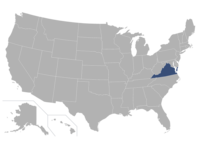
Richmond, VA