Community pharmacists in Pa. say they’re struggling to absorb Rite Aid’s customers
Jun 03, 2025 | 5:57 am ET
Description
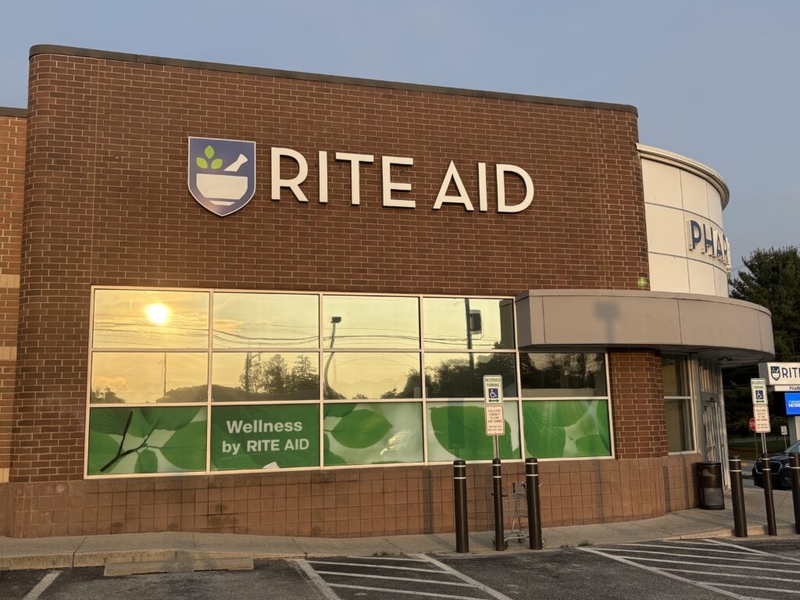
A Rite Aid pharmacy in West Chester, Pa. (Capital-Star photo by Peter Hall)
Ron McDermott is a part-owner of six pharmacies in western Pennsylvania and any outsider might think his business has never seemed better.
Since the Philadelphia-based retail pharmacy chain Rite Aid declared bankruptcy last month and announced plans to close hundreds of stores across the state, McDermott has seen a flood of new customers looking to transfer their prescriptions.
“A lot of people are walking into our pharmacies. A lot of people are calling,” McDermott said. “You’d think that’s great news, but there are problems.”
For most businesses, a major competitor shutting their doors would be welcome. But for pharmacists, taking on new clients can actually pose a risk to their bottom line. McDermott’s pharmacies have had to turn away some new customers whose medications would cost them more to stock and package than they could make selling them.
“It’s the complete opposite of what we want to do as a caring, community-based pharmacy,” he said. “We have to be careful when we take on new patients. That’s a sad situation in health care. It’s not the way it should be.”
McDermott blames middlemen in the pharmaceutical supply chain called pharmacy benefit managers, or PBMs. They’re companies that contract with insurance plans to handle their prescription services, and are responsible for reimbursing pharmacists for drugs that they cover.
But McDermott and other pharmacists say those reimbursements have been getting smaller for years, to the point where pharmacies are actually losing money dispensing certain drugs.
Prescription for trouble: Pennsylvania pharmacists say PBMs are driving pharmacy closures
Along with handling administrative work for insurers and reimbursing pharmacies, they also create insurance plans’ formularies — their list of approved or preferred drugs. In that role, they negotiate with pharmaceutical manufacturers, often receiving kickbacks in exchange for placing their products on a plan’s formulary — their list of approved or preferred drugs. On the other end, they negotiate with pharmacies to determine how much they’ll reimburse them when they dispense drugs to insured patients.
The companies’ power comes largely from their size. The three biggest PBMs, Caremark, Express Scripts and OptumRx, are part of healthcare conglomerates that rank among the biggest companies in the country, and have hands in the insurance and pharmacy businesses too. CVS Health, for example, owns CVS, the largest chain pharmacy in America, CVS Caremark, the largest PBM, and Aetna, one of the largest insurance companies. It’s the sixth largest company in the U.S. by revenue.
The “big three,” as they’re known in the industry, are responsible for processing about 80% of all prescriptions in America. That means pharmacists who refuse to accept the reimbursements that they offer are likely to lose customers whose insurance plans rely on them.
Many of those customers only use generic drugs, which cost pennies or fractions of pennies to stock. Generally, generics make up a majority of a pharmacy’s drug sales, and can be sold at a profit. But a disproportionate share of their revenue comes from the sale of name brand drugs, which can cost thousands of dollars per bottle and is often where reimbursements fall short of costs.
Rob Frankil, the executive director of the Philadelphia Association of Retail Druggists, a trade group for pharmacists, said that McDermott is not alone.
“I’m already having a lot of my members tell me they’re not willing to take in Rite Aid patients, because they’re already losing money on prescriptions they fill,” he told the Capital-Star. “It all stems from the same thing: the reimbursement is bad when you fill prescriptions.”
Greg Lopes, a spokesperson for the Pharmaceutical Care Management Association, a national trade group whose members include CVS, Express Scripts and OptumRx, rejected the notion that PBMs contribute to pharmacy closures.
“PBMs put patients first by working to lower prescription drug costs,” Lopes said in a statement. “It makes no sense to blame PBMs for pharmacy closures in Pennsylvania. Independent pharmacies often point the finger at PBMs, instead of acknowledging that there are many factors that influence closures, including customer preferences for online options and changing demographics. “
Lopes added that PBMs “are supporting community pharmacies in Pennsylvania through programs that increase reimbursement and advocating to allow them to expand the additional clinical services they can offer.”
‘Pharmacies as gold’
Lucas Berenbrok, a researcher at the University of Pittsburgh’s School of Pharmacy, has been tracking pharmacy closures around the country.
Recently, he was part of a study that found around 200 have closed in Pennsylvania alone between January 2024 and March 2025.
Berenbrok’s research did not dive into the reasons for the closures, but, anecdotally, he said that it often comes back to unsustainable business models and low reimbursement rates.
“This is a big deal because one of the things that pharmacy has prided itself on for a long time is how accessible we are,” he said. “That’s why I got started in this research.”
Lately, Berenbrok’s work has been focused on identifying what he and his colleagues are calling “keystone pharmacies.” These are businesses that, if they closed, would create pharmacy deserts in the communities they serve.
Berenbrok said his team identified over 200 keystone pharmacies in Pennsylvania, though the list has not yet been made public.
“It’s more of a preventative approach to say, ‘Hey, let’s look at these pharmacies as gold and try to do things to help them stay in business,’” he said.
The recent spate of closures has not just affected local, independent pharmacies, but large chains as well. In 2021, CVS announced it would close 900 pharmacies. In 2024, Walgreens announced it would close over 1,200 in the coming years.
Last month, Rite Aid declared bankruptcy. In bankruptcy filings, it announced plans to shutter about 150 of pharmacies in Pennsylvania alone, but all of its roughly 350 stores in the state may ultimately close.
In a press release, Rite Aid announced that more than 1,000 of its stores nationally will be sold to other businesses, including CVS and Walgreens, with many remaining open through the transition. A spokesperson for Rite Aid did not respond to multiple requests for comment about how many of those are in Pennsylvania, and how many locations in the state may ultimately shutter.
“A pharmacist is one of very few health care providers where you can walk in and talk to a highly educated, highly trained professional, and sometimes you don’t even have to have an appointment or copay,” Berenbrok said. “It’s a really great thing, I think, for everyone to understand and recognize how important it is to have a pharmacy around.”
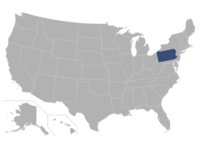
Harrisburg, PA