Colorado, hate state 2.0
Nov 12, 2026 | 12:31 pm ET
Description
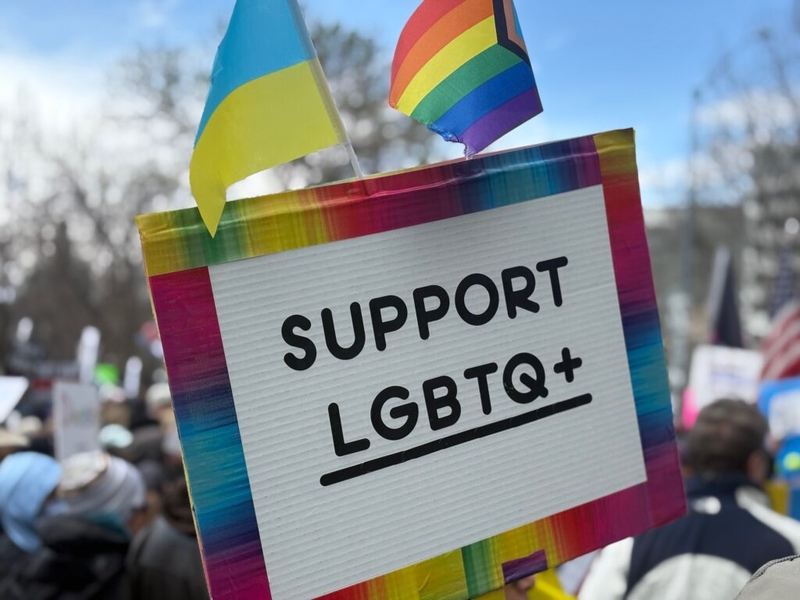
A person holds a "Support LGBTQ+" sign during a rally at the Colorado Capitol to protest Trump administration policies last year in Denver. (Quentin Young/Colorado Newsline)
As voters last week demanded an end to Republican darkness, a deep shadow marred the otherwise bright light of Colorado ballot returns.
Coloradans flipped at least two congressional seats to Democrats. They gave Democrats another term of trifecta government in the state capital, the longest period of one-party dominance in state history. Like voters in virtually every county in the country, they rejected Trumpist values, including cruelty and bigotry — except when it came to Propositions 134 and 135, which will ban transgender students from playing school sports and gender-affirming surgeries for minors, respectively.
The measures both passed by modest margins. Enactment of these bigoted policies recalled the state’s adoption in 1992 of a constitutional amendment that prohibited state and local governments from enacting protections for LGBTQ+ people. The U.S. Supreme Court struck down the amendment, but not before Colorado earned a reputation as the “hate state.”
The anti-trans measures reanimate the state’s mean streak, and with Tuesday’s election, Colorado has launched hate state 2.0.
The measures purport to protect children and families, but it takes little reflection and understanding to conclude they are products of pure bigotry. Anti-trans hate, especially on the right, particularly as defended as a religious imperative, is unconcealed and aggressive in the Trump era.
From the president to Cabinet members to state lawmakers, Republicans are eager to advertise their hostility to the very existence of trans people, and in leveraging their hate for political advantage they create an environment where their targets are physically threatened.
That’s what the Colorado propositions are about.
Maybe the best evidence that the measures had little to do with “protections” is that they solve a problem that doesn’t exist. Reliable figures are hard to come by, but it’s clear that the number trans student athletes is negligible, and in cases when trans student athletes are controversial it’s typically parents or government officials who make it so, not coaches or teammates. The same goes for gender-affirming surgeries for youth. They virtually never happen.
The measure on school sports updates state law to define boys and girls based on physical anatomy and exclude transgender people. School sports teams will have to be designated for men, women or co-ed participation, and the schools will be required to adopt policies to implement the law. But how, exactly? This is an area where voters might not have thought through the implications of voting “yes.”
State Rep. Brianna Titone, an Arvada Democrat who is the first trans lawmaker in state history, notes that implementation could involve expensive DNA testing.
“Does everybody need to be tested?” she asks. “Are we going to single out certain people who have features that don’t fit the actual aesthetic of what a woman’s supposed to be? And when we do that, right, what happens? We’re now policing women of all different types, and we’re setting a standard of what is a woman, what she’s supposed to look like, what she’s supposed to be like.”
Some women have more “masculine” features than others, and those features are different across races, Titone said, adding, “Are we going to be singling out women of different races more than others?”
Physical inspections of prospective student athletes are understood as another implementation method. Titone said genital inspections could expose all girls to abuse, citing the case of Larry Nassar, the former U.S. women’s national gymnastics team doctor who was convicted of sexually abusing athletes in his care.
Democratic Gov.-elect Phil Weiser last week, the day after he was elected, said he was uncomfortable with the prospect of inspections. “I don’t believe it would be acceptable for Colorado to have every student athlete have to go through full-body examinations or other invasions of privacy,” he said.
That’s partly why, in an unusual move, he endorsed potential legislative changes to the new anti-trans laws. State leaders typically refrain from interfering with the direct-democracy will of the people. But in this case, Weiser said, “We’re going to have to take a look at these anti-trans measures, and what adjustments are necessary and appropriate.”
Titone, though she’s term-limited and will be out of office when the new legislative session starts in January, said she agrees that lawmakers should explore ways to delay, blunt or eliminate the noxious effects of the laws. Her position is partly based on her belief that many voters made a mistake.
“I think there’s a lot of people who just didn’t know what they were actually voting for in this case,” she said. “If we had the time to give them the proper information about it, maybe they would actually say, ‘Yeah, maybe I was wrong.'”
It should not take another Supreme Court smackdown for Colorado to avoid a return to hate-state status. The decent, humane path forward would be for it, whether through elected bodies or the electorate itself, to admit that the codification of anti-trans bigotry was wrong.
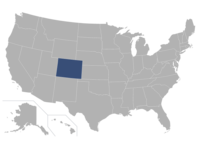
Denver, CO