Coalition is confident the Ohio Supreme Court will rule private voucher system unconstitutional
Oct 20, 2026 | 3:55 am ET
Description
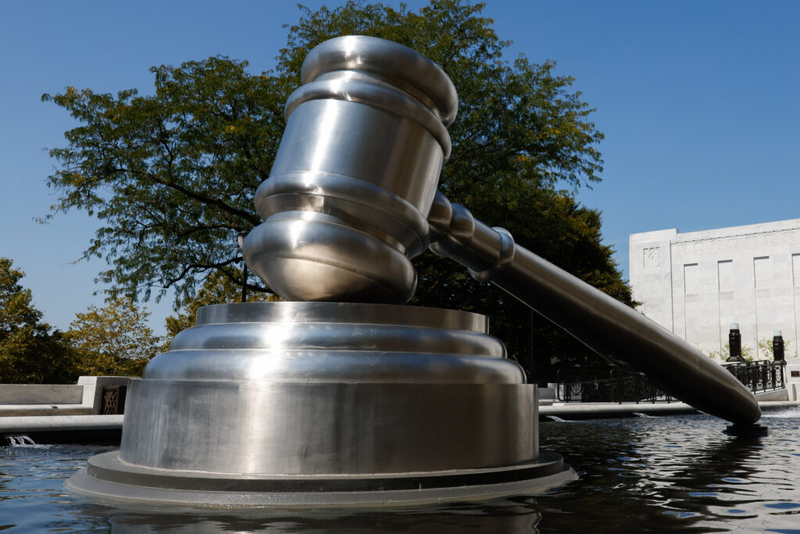
The Gavel outside the Supreme Court of the State of Ohio, September 20, 2023, at 65 S. Front Street, Columbus, Ohio. (Photo by Graham Stokes for Ohio Capital Journal. Republish photo only with original article.)
The public school coalition Vouchers Hurt Ohio is confident the Republican-controlled Ohio Supreme Court will find the state’s Education Choice private school voucher program unconstitutional.
Vouchers Hurt Ohio is a coalition of more than 300 public school districts challenging the constitutionality of the state’s EdChoice voucher program.
The 10th District Court of Appeals in Franklin County ruled last week the EdChoice voucher program is unconstitutional. This ruling affirmed a Franklin County Common Pleas Judge June 2025 ruling that found the EdChoice program unconstitutional.
“We are in a fight to preserve public education,” said Ohio Coalition for Equity and Adequacy of School Funding Executive Director William Phillis.
“We’re hopeful that the justices of the Ohio Supreme Court will be able to put the Ohio Constitution and the welfare of Ohio public school students ahead of politics,” said Mark Wallach, an attorney with the law firm McCarthy, Lebit, Crystal & Liffman who serves as legal counsel for Vouchers Hurt Ohio.
“The 10th District’s opinion is not only scholarly but correct, and is in the best interests of not only the Constitution but of Ohio students.”
Interim Ohio Republican Attorney General Andy Wilson said in a statement Thursday morning that he would appeal the decision to the state supreme court.
“If the legislature wants to help parents fund that choice, then that is within the authority of the General Assembly to do so,” Wilson said. “The current system does not hurt our public schools … This is about a family’s choice on how they want to educate their kids.”
The EdChoice voucher program will still exist while this plays out in court.
Republicans currently control the Ohio Supreme Court 6-1. Ohio Republican state lawmakers made Ohio Supreme Court races overtly partisan by adding party labels in 2021. Republicans have won every Ohio Supreme Court race since.
Justice Jennifer Brunner, who was first elected in 2020, is Ohio’s last Democrat holding statewide elected office and is running for reelection this November against Republican challenger Colleen O’Donnell.
In Ohio, K-8 students can receive a $6,166 scholarship and high schoolers can receive a $8,408 scholarship in state funding under the EdChoice voucher program.
The state gives Richmond Heights Schools in Cuyahoga County just over $1,500 per pupil, said Jacky Brown Sr., vice president of the Richmond Heights Board of Education.
“The state should be at minimum an equal partner with local districts in funding public schools,” he said.
The Ohio General Assembly did not fully fund the final phase of the Fair School Funding plan in the latest state budget.
The state appropriated $2.75 billion less for fiscal year 2026 and fiscal year 2027 than what the plan required, according to Policy Matters Ohio.
“Lawmakers abandoned the Fair School Funding Plan, their own plan, and that pushes more of the burden onto local property taxpayers,” Jacky Brown Sr. said. “Our community has voted down three consecutive levies.”
Richmond Heights Schools had 706 students during the 2025-26 school year, according to the Ohio Department of Education and Workforce.
Richmond Heights faces a $1.2 million structural deficit and the threat of a state-mandated fiscal emergency, Jacky Brown Sr. said.
“This school year, we eliminated high school bussing,” he said. “Our entire preschool program is suspended.”
There were more than 1.6 million students enrolled in Ohio’s public schools during the 2025-26 school year, according to ODEW.
“The state’s duty is to fund public schools, not to drain them to pay private school tuition,” Jacky Brown Sr. said.
The state of Ohio spent more than a billion dollars of taxpayer money on private school vouchers in fiscal year 2025.
“When we win, lawmakers will no longer be able to use public tax dollars to fund an unconstitutional ed choice voucher program,” said Eric Brown, Vouchers Hurt Ohio Steering Committee Chairman and former Ohio Supreme Court Chief Justice.
Ohio lawmakers had differing opinions on the ruling.
“The constitutionality of various school choice programs has been affirmed by the United States Supreme Court, the Ohio Supreme Court, and a variety of other tribunals over the past several decades,” Ohio House Speaker Matt Huffman, R-Lima, said in a statement. “The decision of one of 12 courts of appeal in Ohio will not affect that.”
Ohio Senate Minority Leader Nickie J. Antonio, D-Lakewood, applauded the ruling.
“The Republican supermajority has continually expanded vouchers to private and religious schools that are allowed to remain unaccountable without the same transparency required of our public schools,” she said in a statement.
“This comes at the expense of our public schools, which are rigorously regulated and mandated to educate every student regardless of their income, ability, or background.”
Follow Ohio Capital Journal Reporter Megan Henry on X or on Bluesky.
Columbus, OH