Clemson fires employee, suspends professors for social media posts mocking death of Charlie Kirk
Sep 15, 2025 | 3:24 pm ET
Description
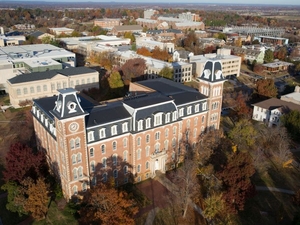
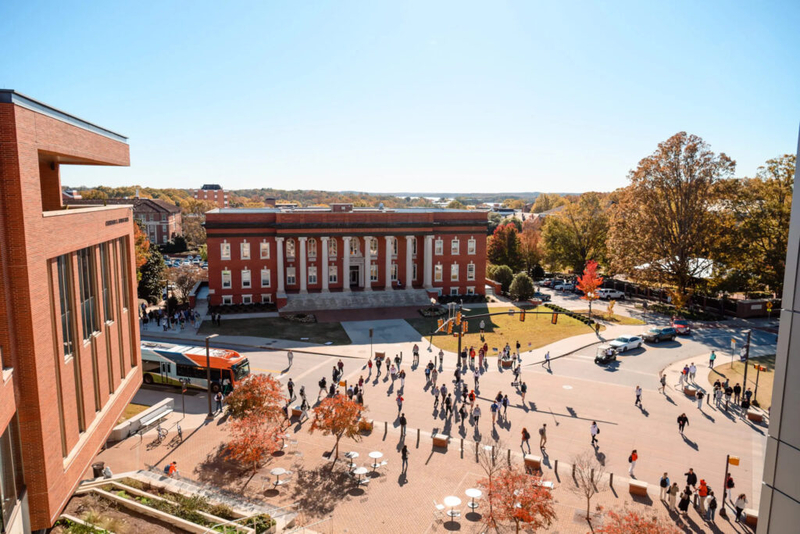
Clemson University has fired an employee and removed two professors from teaching duties for what it called “inappropriate” social media posts related to the assassination of conservative activist Charlie Kirk. (File photo courtesy of Clemson University)
Clemson University has fired an employee and removed two professors from teaching duties for what it called “inappropriate” social media posts related to the assassination of conservative activist Charlie Kirk.
Monday’s firing came two days after the university suspended the still-unnamed employee. An investigation for possible termination is underway for the two professors. They were initially told Friday to “stay out of the classroom,” a statement from the school read.
The public Upstate university declined to provide any further information on the “personnel matters.”
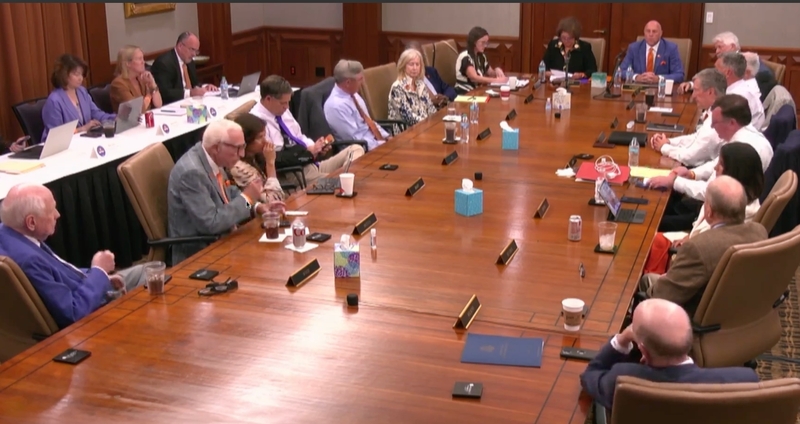
Clemson announced the firing and teaching suspensions an hour before the school’s governing board gathered for an emergency meeting Monday.
After meeting behind closed doors for 3 ½ hours, board Chairwoman Kim Wilkerson read a statement on the board’s behalf: “The Clemson University Board of Trustees expects the highest levels of integrity, accountability and professionalism from all university employees. When individuals fall short of these expectations, especially in ways that compromise the safety of our campus community and undermine the learning environment, decisive action is not only warranted, but necessary to uphold the university’s mission and values.”
Wilkerson went on to say the board supports university President Jim Clements’ “efforts to take immediate and appropriate measures regarding the employees in question.”
All 13 board members, including former Gov. Nikki Haley and former Lt. Gov. Bob Peeler, attended the meeting. Several trustees emeriti also attended, included David Wilkins, former House speaker and United Nations ambassador to Canada. Other than Wilkerson reading the statement, no member spoke publicly.
The social media posts came to light last week when Clemson College Republicans began flagging the three employees’ online reactions to Kirk’s death — including posts from two assistant professors.
The actions followed outcry online from state politicians, Clemson students and alumni and Republican members of South Carolina’s congressional delegation.
The school posted a notice of the meeting following a letter from Legislature’s GOP leaders Saturday calling on the board to gather.
Clemson suspends employee following social media posts mocking death of Charlie Kirk
On Monday, Attorney General Alan Wilson, who is running for governor in 2026, told Clemson leadership they can fire the employees without risking prosecution.
A state law dating to 1950 makes it illegal to “discharge a citizen from employment or occupation” because of their “political opinions or the exercise of political rights and privileges guaranteed to every citizen.” Violators can be fined up to $1,000 and sentenced to up to two years in prison.
But that law “poses no obstacle from a criminal law standpoint to the termination of these individuals,” Wilson wrote in a publicly released letter addressed to Clemson President James Clements. The attorney general noted he’d carefully reviewed the law’s history and court precedent.
“I have determined that any corrective action by Clemson, terminating these professors, will not be prosecuted in the criminal courts of this State,” he wrote, adding that applies to every other college in South Carolina as well.
“I strongly support freedom of speech protected by the First Amendment, as defined by court decisions, as well as civil discourse conducted in a civil manner,” he wrote. “The statements of these professors were far from civil, however. Just the exact opposite.”
Wilson, in his letter, called the comments “vile and incendiary comments on a public platform.”
While Clemson officials don’t risk prosecution, the college could still be sued “if the professors believe their free speech rights were violated” by their firing, Wilson noted. However, he concluded by citing a 2006 ruling by the U.S. Supreme Court that all employees of the government “must accept certain limitations on his or her freedom.”
In that case, the Supreme Court placed restrictions on public employees’ speech while they’re performing their official duties.
The First Amendment has historically granted added protections to government workers when they are speaking as private citizens on what the courts consider “matters of public concern.” Still, the advent of social media has muddied the waters of what is considered on-the-job, said David Hudson, a professor of First Amendment and constitutional law at Belmont University in Nashville.
No one requested Wilson’s opinion. He reviewed the law on his own, according to his office.
Two days earlier, when Clemson announced the first suspension, Wilson posted on social media “Nope. Not good enough.”
“Clemson, you know what to do — do it,” wrote the graduate of Francis Marion University and the University of South Carolina School of Law.
Other Republican gubernatorial candidates also weighed in. None of them graduated from Clemson.
U.S. Rep. Ralph Norman, whose district covers South Carolina’s Charlotte suburbs, posted on social media that other universities have fired employees and expelled students.
“For the safety of the students, Clemson must take action or lose every cent of funding,” wrote Norman, a Presbyterian College graduate.
Clemson is far from the only public college investigating social media posts.
The University of Mississippi announced last week it had terminated an employee due to “hurtful, insensitive comments” made on social media regarding Kirk’s killing, according to reports by Mississippi Today, a States Newsroom affiliate.
Ball State University also is investigating similar postings from a pair of employees, according to the Star Press in Muncie, Indiana.
Middle Tennessee University fired a dean for online comments.
And the University of Tennessee announced Monday it was investigating posts from an assistant professor, NBC affiliate WSMV-TV reported.
SC colleges to talk about campus safety in wake of Charlie Kirk assassination
“This is popping up all over the country,” Hudson said. “It’s raising the question of what exactly are the free speech rights of public employees when they’re not on the job.”
A likely argument for firing a public college employee, he said, is that the employee’s comment “undermines the mission of the university.” Even a government agency can fire an employee if it asserts that the comments were bad for the agency’s operation, Hudson has written.
Hudson also reminds workers that exercising First Amendment freedoms aren’t necessarily without consequence.
“As I often tell my students, the price of free speech is usually quite high,” he said.
U.S. Rep. Nancy Mace, a Citadel graduate who represents the state’s coastal 1st Congressional District, called on state legislative leaders to call a special session to “defund Clemson until they do what is right, ethically and morally.”
Furthermore, Mace wrote a letter to U.S. Secretary of Education Linda McMahon, asking the agency to “cut off federal funding from any elementary, secondary, and post-secondary educational institution refusing to hold teachers or administrators accountable for celebrating the murder of Charlie Kirk.”
And Lt. Gov. Pamela Evette on Saturday urged students to drop out of any classes taught by professors who “spewed hateful speech and far-left rhetoric celebrating the death of Charlie Kirk.” For all students who drop a class for those reasons, their schools should refund them for the cost of the class, said Evette, a graduate of Cleveland State University in Ohio.
Kirk, who co-founded Turning Point USA in 2012 to combat progressive politics on college campuses, was shot in the neck about 12:20 p.m. Wednesday as he debated with students at Utah Valley University. About 3,000 people gathered outside for one of Kirk’s signature “prove me wrong” events.
A controversial figure whose organization fueled a conservative youth movement, Kirk was answering a question about mass shootings when he was hit by a single bullet. The 31-year-old father of two was pronounced dead at a local hospital. On Friday morning, officials announced the arrest of a 22-year-old Utah man, who was not a student of that college.
Columbia