Charleston port chief says recovery underway, but more work must be done
Oct 28, 2026 | 4:00 am ET
Description
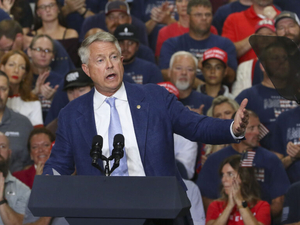
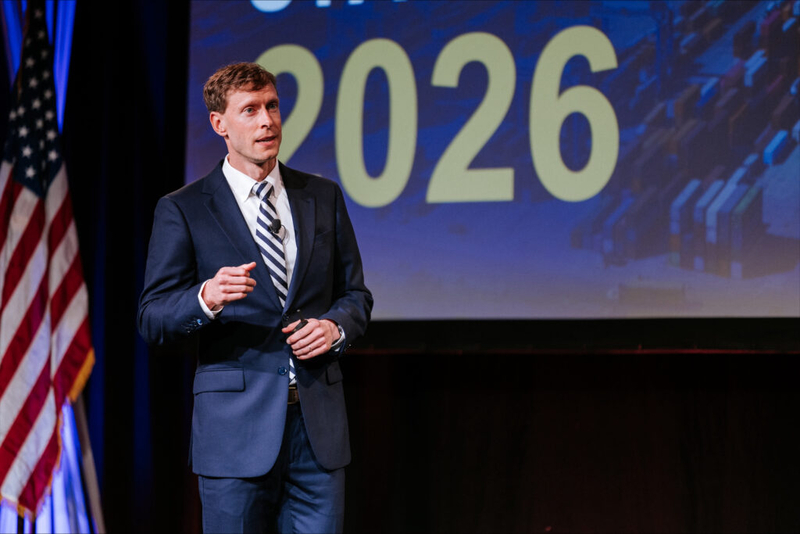
Micah Mallace, president and CEO of the S.C. State Ports Authority, delivers the 2026 State of the Port speech at the North Charleston Convention Center on Tuesday, Oct. 27. 2026. (Photo by Jeni Becker/Courtesy of the S.C. State Ports Authority)
NORTH CHARLESTON — With the promise of a 6% increase in containerized cargo already on the books and a better financial footing to build on, the South Carolina State Ports Authority is now in the second phase of a three-part comeback plan that will restore its competitiveness in the South Atlantic region, its president reported.
“Where last year I personally could not have stood up here and said I saw light at the end of the tunnel … today I do,” Micah Mallace, the authority’s president and CEO, said Tuesday during his annual State of the Port address at the North Charleston Convention Center.
“It’s not some rose-colored glasses or hopeless optimism, but we are on the next steps toward overcoming some of our largest obstacles,” Mallace told a record audience of 1,150 people at the event hosted by the Propeller Club of Charleston.
Mallace — who took over as CEO a year ago following the abrupt resignation of the agency’s previous leader — outlined a three-phase comeback plan for the authority, which owns and operates the Port of Charleston.
Following a year of regaining competitiveness, which Mallace termed the first phase, the authority is looking to improve service and build on what has been accomplished.
“We have kick-started our momentum story,” Mallace said, adding that while “we have arrested negative momentum” the effort still needs help from the entire maritime community to move forward.
“It’s fragile and still requires attention,” Mallace said of the recovery. “The kindling is burning. The logs are ready to go on. Walk away, and it goes out. Tend to it, work together, and it grows.”
Mallace said the authority had been spending too much money while chasing too little cargo and charging container ship operators and other customers high rates that exceeded the amount competitors like the Port of Savannah were asking.
Operating expenses have been trimmed by more than 20% in the past year — savings that have been passed on to customers and a pledge Mallace made during his first State of the Port speech a year ago.
SC Ports shifting focus to growth with immediate benefits, new CEO says
That hasn’t yet shown up in a year-over-year increase in cargo volumes, which were down 5% at the end of the most recent fiscal year.
Still, Mallace said businesses have committed to bringing an additional 159,000 containers through the port in the coming year, roughly 6% of the port’s annual total, due largely to financial and operational improvements the port has made.
Unlike previous years, where the port’s cargo mix was largely manufacturing based, the new business coming online through 2027 represents a broader mix of industrial products, consumer goods and export commodities.
“This new business is a direct result of the port team’s willingness to rethink how we operate, find innovative solutions and deliver the exceptional service our customers need to grow,” Mallace said, adding that while cost cuts were largely across the board the agency’s sales staff was doubled.
“We are building momentum,” he said. “We have a clear strategy, and we are committed to turning this momentum into sustained growth.”
While continuing to cater to the state’s manufacturing base, the authority will sharpen its focus on luring new retail distribution centers to South Carolina.
Retail goods continue to outpace other import categories throughout the Southeast, but a statewide lack of distribution and warehouse space has hindered growth here. Consumer goods account for 81% of the value of containerized goods nationwide, but only about 50% at Charleston’s port.
“Where distribution centers locate, the ships follow,” Mallace said.
SC Ports temporarily halts Leatherman operations in face of high costs, waning demand
The authority also intends to hold costs steady while improving service, including truck turn times, in the coming year.
Getting to the third phase of the recovery plan will take time and a sustained effort, but Malllace said he will know it has been successful when the port reopens its Leatherman Terminal in North Charleston.
The authority on Aug. 1 indefinitely paused operations at the $1 billion terminal, which has been underutilized because of its high unionized labor costs. The port’s other container terminals do not have the same labor structure.
“That will signify that we have achieved volumes and an operating cost structure that suggests the terminal stays open, not for another year or two but for good,” Mallace said, adding this is not the time.
“We are not rushing any of these things,” he said. “We want to be intentional. We want to do it right.”
The same is true of the Navy Base Intermodal Facility, a near-dock rail yard in North Charleston where trains from Norfolk Southern and CSX Corp. will move cargo boxes.
Mallace said the authority is still negotiating contracts with those railroads and an opening date for the rail yard is not scheduled.
“The first phase was to get competitive again,” Mallace said of his three-pronged plan. “The second phase of the comeback plan is to strengthen the core and deliver on some of the commitments we’ve made. And the third phase — make it stick.”
Columbia