Bee season starts 17 days early, potentially damaging hives, experts say
May 20, 2026 | 4:37 pm ET
Description
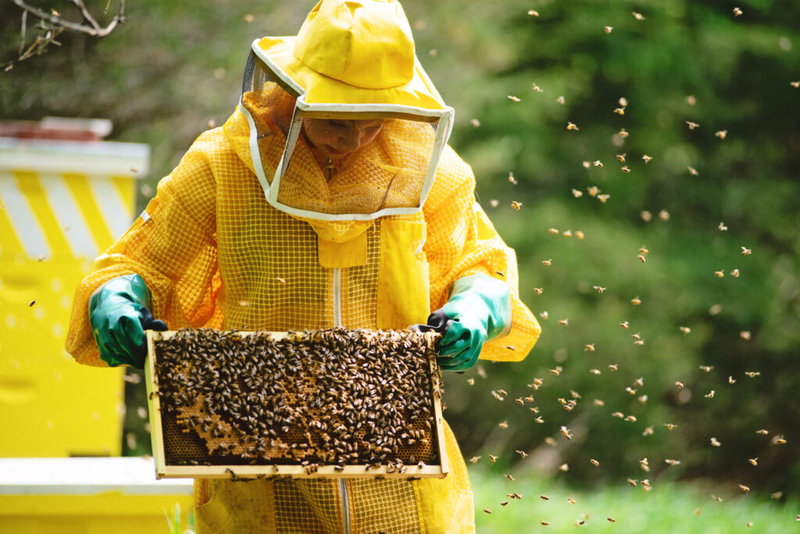
An early start to bee season, which experts attribute to warmer temperatures, could have widespread impact. (Photo by Cavan Images/Brenda Howe/Getty Images)
On World Bee Day, experts say an unusually early North American bee swarm season, which began 17 days earlier than last year following record heatwaves in 2026, could reshape bee populations, pollination patterns, honey production and the timing of seasonal ecosystems.
While bee swarming is a natural reproductive process in which bee colonies split and form new groups, researchers and beekeepers say that early activity may be connected to broad environmental changes linked to warmer temperatures.
The time shift could have a wide array of consequences. Bees pollinate more than one-third of food crops and play a critical role in crop yields and improving nutritional quality.
Mateo Kaiser, the managing director of Swarmed, a network that tracks and connects communities with more than 10,000 local beekeepers, said that the early 2026 swarm season was driven by unusually warm winters in the western U.S.
“This year was quite unusual and significantly earlier than the past four years, so we’ll be tracking to see how this impacts survival rates at the end of the season,” Kaiser said.
Kaiser added that one concern created by earlier bee seasons is the extended life cycle and season of the varroa destructor mite, a parasite that attacks and feeds on honey bees and transmits deadly viruses.
“One of the things that we’re concerned about is that throughout the season, we’re going to see higher mite loads, and those higher mite loads will lead to a higher winter mortality rate,” Kaiser said. “We won’t know that until the winter survey has been done to see how beekeepers are faring, so this is kind of an early warning signal for what might come.”
Noah Wilson-Rich, a behavior ecologist and founder of the Urban Bee Lab, a non-profit that promotes bee health, said spring can be difficult for beehives because colonies often emerge weakened from winter and can experience food shortages if plant growth lags behind early swarm activity.
“One of the things that we see with a changing climate is that the temperature can increase rapidly, so we can have a lot of nice days, but flowers can’t just pop out,” Wilson-Rich said. “Plants are typically lagging behind when bees are active.”
Wilson-Rich added that this year, plants have been catching up to the early swarms, and blooms have been occurring earlier, which has helped previously dwindling beehives.
“What we’re seeing now is that plants are catching up, and these blooms are likely happening sooner, and that’s a good thing for bees, because they’re able to get more food sooner, especially at the time of year when they really need it,” Wilson-Rich said. “We’ll get more plants that are promoted through their pollination as a positive cycle, so it’s a really good thing for bees to have more flowers earlier.”
Wilson-Rich said that a potential consequence of an early swarm is that although honeybees, which are managed by beekeepers, benefit from the extended season, scientific data has shown that other pollinator species can face negative effects.
“One potentially negative thing is that there are 4,000 species of native bees in the United States, 20,000 species of bees around the world and honeybees are just one of them,” Wilson-Rich said. When honeybees are doing really well, there is data showing that they’re kind of taking food away from other pollinators.”
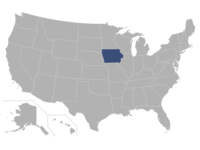
Iowa beekeepers also see weather-related effects on hives
The effects of an early swarm season have also been visible closer to home.
Chris Puetz, the president of the Iowa Honey Producers Association (IHPA), said he has noticed faster plant growth as a result of warmer temperatures, emphasizing that beekeeping is largely dependent on the weather.
“Our season is ahead a little bit, and while it may impact overall nectar flow, it is largely dependent on the weather we get,” Puetz said. “Last year started off pretty normal, but when we got into late spring and summer, Iowa had more rain and that pretty much decimated the honey crop in Iowa last year, because when it rains, nectar gets washed out of flowers.”
Julia McGuire, a beekeeper and IHPA member, said she would like to see more Iowa beehives because of the potential landscaping benefits.
“I’ve brought beehives to people’s yards and I had a resident say, ‘I’ve had this bush for 15 years and it never bloomed until you brought the hive over here,’” McGuire said. “There’s wildlife benefits and we want to encourage native populations.”
Wilson-Rich said although widespread Iowa crops like corn and soy do not require bee pollination, the mere presence of bees can actually boost crop yield.
Wilson-Rich added that promoting and planting native plants can help metabolize pesticides that are commonly used for Iowa agriculture, creating a healthier environment for bees in the state.
“Agricultural crops tend to require agricultural chemicals, so by planting native plants and promoting those, it’s a way that bees actually have a chance to metabolize those and survive those circumstances better,” Wilson-Rich said.
McGuire said she created a phenology calendar to track different nature cues regarding the seasonal changes. Phenology is the study of cyclical, seasonal events in nature. McGuire said an earlier swarm season is not concerning for Iowa beekeepers.
“We have to be ready for earlier swarms,” McGuire said, adding that she has been observing linden trees and blooming maples and dandelions for signs of nectar flow and cues for timing of beekeeping chores. “We aren’t really alarmed, we’re just prepared.”
Des Moines, IA