Auditor: Former retirement director had pattern of absences before resignation
Nov 06, 2026 | 1:29 pm ET
Description
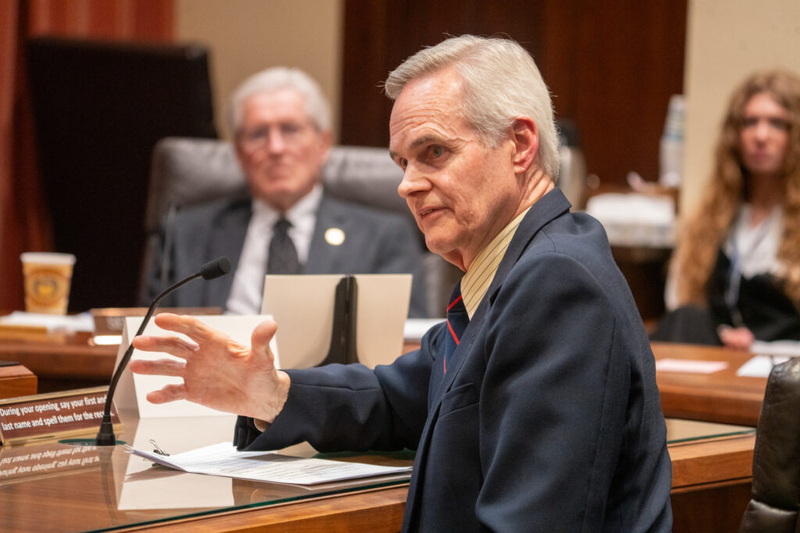
Nebraska Auditor of Public Accounts Mike Foley testifies before the Legislature's Government, Military and Veterans Affairs Committee. Feb. 5, 2026. (Zach Wendling/Nebraska Examiner)
LINCOLN — New research from State Auditor Mike Foley into the short-lived executive director of Nebraska’s Public Employees Retirement System showed the director had a tumultuous experience in the agency before he walked off the job.
Thomas Pfeifle submitted his resignation to the state retirement board Sept. 21 after roughly three months leading the agency, saying he wanted to be closer to his children in Colorado. His resignation letter set his last day as Oct. 31, which the board approved at a special meeting Sept. 30.
NPERS staff said Pfeifle did not work in the NPERS office after Sept. 21. Foley estimated he would receive roughly $28,000 in salary and benefits for six weeks of unperformed work over three payroll periods — two of which have already been issued.
“You can’t make this stuff up,” Foley said in a press release. “The (retirement board) is hell-bent on lavishing tens of thousands of dollars on a spectral former administrator who, besides having an incredibly short, but evidently troubled, tenure of under four months with NPERS, was no longer working at the agency during the period for which he is being paid.”
Nebraska auditor presses state retirement agency for answers on outgoing director’s pay
Foley’s office sent a letter to NPERS last week outlining the improprieties associated with Pfeifle’s continued payment and disclosing new details about the director’s time with the agency.
After the retirement board approved the terms of Pfeifle’s employment on June 15 — including approval of an annual base salary of $205,000 — Foley’s letter said Pfeifle sent an inquiry from his personal email on July 8 to a major financial services company and retirement plan provider to solicit possible employment.
The letter claims that Pfeifle also drafted multiple resignation letters in early September that were eventually deleted, and that Pfeifle was given a “personal improvement plan” that he was to follow from Sept. 8 through Nov. 13. The personal improvement plan listed several areas of improvement, including proper use of work time, according to Foley.
The letter lists several emails sent from Pfeifle to NPERS staff in July and August stating that he had left the office midday and that he would remain out of the office for a day or more. Foley alleged NPERS paid Pfeifle for eight hours of work, despite his putting in a partial day or not being present at all.
“I think they wanted to get that guy out of there so bad that they (said), ‘Let’s just pay him and get him out of here,’” Foley told the Examiner.
Through the research, Foley’s office “became aware” that multiple employee complaints had been submitted involving Pfeifle, which Foley said required administrative action under NPERS’ policy. The letter does not specify what the complaints were and notes that Foley’s office did not determine the validity of the allegations.
However, Foley criticized the agency for not sending the complaints to the required offices until “well over a month” after the initial complaints were filed. The letter said the complaints were distributed the same day Foley’s office reached out to confirm that this policy was followed.
In NPERS’ response to this criticism, officials said the agency would provide board members and staff with education and training on its internal policies to ensure that reportable incidents are reported in a timely manner.
Foley recommended the board cease all future payments to Pfeifle and take steps to recoup the two prior payments he said were issued illegally. NPERS response said the board intends to develop reporting procedures to address oversight of the executive director’s working hours and in-office work, and will consider policies that directly address leadership employment and end-of-employment matters.
Foley said he was not satisfied by the agency’s response and expressed frustration that his office lacks enforcement authority to demand corrective action. He said there was little his office could do beyond what it already has done.
“Everyone knows exactly what is going on — from the (retirement board) members themselves to the director of Administrative Services, who processed this outrageous payout, to the highest state officials,” Foley said. “But nobody will lift a finger to stop it.”
Lincoln, NE