Appalachian advocates urge incoming Congress to bolster flood response after numerous disasters
Nov 23, 2026 | 5:30 am ET
Description
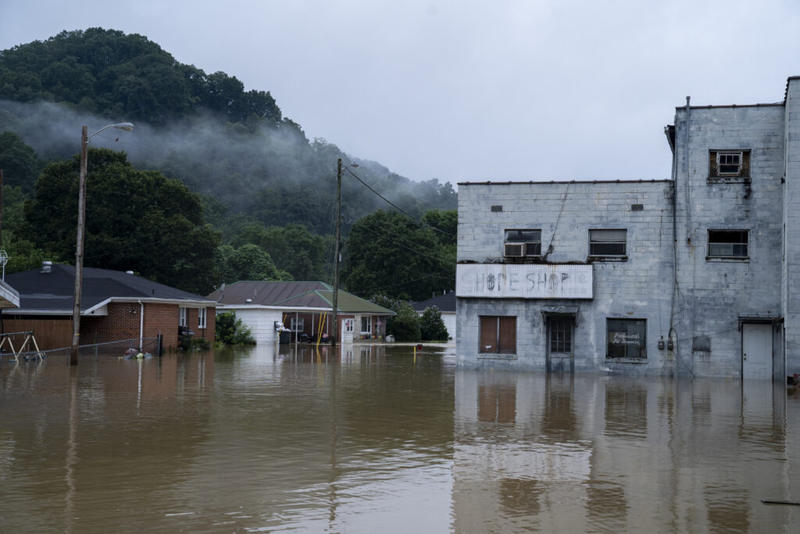
Jackson, the Breathitt County seat, on July 29, 2022. (Photo by Michael Swensen/Getty Images)
A coalition of environmental and Appalachian advocacy organizations across several states, including Kentucky, is urging the incoming Democratic-controlled U.S. Congress to bolster funding and streamline bureaucracy to better respond to and prepare for flooding disasters.
The Appalachian Flood Resilience Coalition published a new report Thursday with recommendations for increased funding for flood recovery and adaptation, along with fewer barriers for lower-income communities to access that aid.
Jessica Arriens, a National Wildlife Federation program director for energy and climate change, told reporters Thursday that “lots of turmoil” at the Federal Emergency Management Agency and other federal agencies and natural disasters, including Hurricane Helene, led the coalition to publish a new policy report aimed at the incoming Congress.
“I think Helene, in particular, really demonstrated the depth of the challenge facing Appalachia’s rural and mountainous communities that are trying to recover from and build resilience to floods,” Arriens said. “It also put, I think, Appalachia on the national stage as a place that’s particularly flood vulnerable.”
The Trump administration has sought to cut FEMA staff and shift more responsibility for disaster response to state and local governments, offering sweeping changes earlier this year that could reduce the number of disasters the federal government approves funding for. Meanwhile, Appalachian communities across the region, including in Kentucky this summer, have faced repeated instances of destructive and deadly flooding.
The report was co-authored by the regional policy group ReImagine Appalachia, the National Wildlife Foundation, the North Carolina-based environmental group Appalachian Voices, the Virginia-based environmental group Wetlands Watch and the Kentucky-based nonprofit legal group Appalachian Citizens’ Law Center.
Many of the broad recommendations in the report remain similar to another flood policy report published by the coalition in 2024, including:
- Increasing flood mitigation funding through grant programs such as the Building Resilient Infrastructure and Communities (BRIC) and reducing the fund matching requirements for “economically distressed” communities across FEMA’s recovery and adaptation programs.
- Move forward with reforms, including some offered in the bipartisan FEMA Act of 2025, to simplify disaster aid applications, increase the available disaster case managers and extend the timeframe for when temporary housing is available to flood survivors.
- Provide proper funding to federal agencies such as the United States Geological Survey and the National Oceanic and Atmospheric Administration to better forecast flooding in Appalachian watersheds.
- Invest in “nature-based” hazard mitigation and ensure coal mine sites are properly reclaimed to “restore natural hydrologic functions as well as the land’s ecological health.”
Brendan Muckian-Bates, a policy & advocacy associate at the Appalachian Citizens’ Law Center in Letcher County, said he believes the policy platform can gain traction with new members of Congress beyond Appalachia, with the coalition working to hear how flooding and related issues have impacted different Congressional districts across the country.
“I think there’s certainly a lot of different ways that we can take the information here, that is certainly very Appalachian-specific, but highlighting those common issues, whether it is private roads and bridges, increased flood insurance costs,” Muckian-Bates said.
Frankfort