Andy Biggs says he will vote to release the Epstein files, despite Trump’s opposition
Nov 14, 2025 | 9:15 am ET

Description
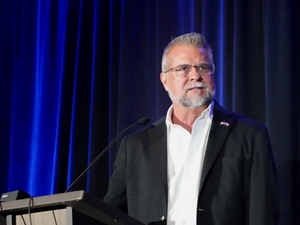
U.S. Rep. Andy Biggs speaks at a campaign rally for Donald Trump in August 2024 in Glendale, Ariz. (Photo by Gage Skidmore/Flickr/CC BY-SA 2.0)
At least one Republican member of Arizona’s congressional delegation has promised to side with Democrats in releasing the Epstein files, despite President Donald Trump and his administration doing everything possible to prevent it from happening.
U.S. Rep. Andy Biggs, a Trump ally who has received the president’s endorsement in next year’s race for Arizona governor, on Thursday said he would vote in favor of releasing the files from the U.S. Department of Justice’s investigation of convicted sex offender Jeffrey Epstein. The comments were made to and reported by KJZZ, the NPR affiliate for the Phoenix market.
“There’s nobody here that can define what the Epstein files is, not even myself,” Biggs told KJZZ. “I don’t know what the Epstein files are, but what I’m in favor of is releasing and being transparent with all the documentation that they have that they can release.”
It’s unclear whether the other members of Arizona’s Republican Congressional delegation also plan to vote to release the files, and none of them immediately responded to a request for comment.
Biggs’s comment comes a day after Democrats on the House Committee on Oversight and Government Reform released three exchanges with content suggesting Trump was aware of Epstein’s abuse of underage girls.
Hours later, Republican leaders on the committee released more than 20,000 documents they received from the Epstein estate.
On the same day, Arizona’s newest member of Congress, Tucson Democrat Adelita Grijalva, was sworn in to represent Arizona’s 7th Congressional District. She won a special election 50 days earlier to take the seat vacated by her father Rep. Raúl Grijalva, who died in March.
Immediately after she was sworn in, Grijalva signed a discharge petition that would force a vote by the full U.S. House of Representatives to release all unclassified documents in the Department of Justice’s possession about Epstein and his co-conspirator, Ghislaine Maxwell, who is currently imprisoned after being convicted of federal sex trafficking charges.
As of early September, the discharge petition, led by Reps. Thomas Massie, R-Ky., and Ro Khanna, D-Calif., had garnered the signatures of all Democrats and four Republicans, leaving the petition just one shy of the 218 signatures needed to bypass Republican Speaker Mike Johnson, of Louisiana, and force a vote on the House floor.
The three Republicans who joined Massie in signing were Reps. Lauren Boebert of Colorado, Marjorie Taylor Greene of Georgia and Nancy Mace of South Carolina.
Arizona’s Rep. Eli Crane, a Trump-aligned Republican, said earlier this year that he favored transparency regarding the Epstein investigation, but then changed course following pressure from the Trump administration.
Biggs told KJZZ on Thursday that he has not been pressured by Trump.
Arizona’s other Republican congressmen — David Schweikert, Paul Gosar, Abe Hamadeh and Juan Ciscomani — have stayed quiet on the issue, even after repeated protests outside of Schweikert and Hamadeh’s offices demanding the files be released.
Grijalva and her supporters accused Johnson of delaying her swearing in by 50 days in an effort to stall the release of the Epstein files, but Johnson denies that, blaming the delay instead on the federal government shutdown that just ended.
There’s no guarantee that a resolution to release the files would pass a vote in the House of Representatives, especially with pressure from the president to vote against it. And even if it did pass the House, it would still have to pass the Senate.
If that happened, it would go to Trump, where it would face an almost certain veto.
Phoenix, AZ