Amidst election noise, some good news for the First Amendment
Nov 12, 2026 | 4:00 am ET
Description
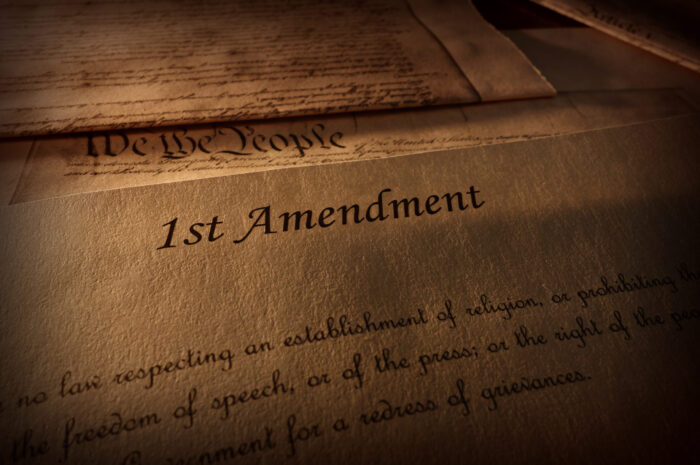
First Amendment of the US Constitution. (Stock photo Getty Images)
Slammed with unprecedented advertising and mudslinging, Ohioans across the political spectrum were relieved that the midterm election is over.
Spending in Ohio’s U.S. Senate race topped half a billion dollars and many experts have described the Ohio governor’s race as among the ugliest nationwide.
But amidst the election noise, there was a bit of good news for the First Amendment right of free speech that undergirds our Republic in times of stress.
On the Saturday before the Nov. 3 election, a federal judge dismissed President Trump’s defamation lawsuit against The Wall Street Journal.
Importantly, the court’s decision affirmed a landmark U.S. Supreme Court ruling that protects freedom of the press and safeguards against public officials abusing libel and defamation claims to chill robust debate.
U.S. District Court Judge Darrin P. Gayles cited the legal standard established in New York Times v. Sullivan in 1964. The unanimous Sullivan ruling was intended to prevent public officials from using libel lawsuits as weapons to bankrupt the press and stifle criticism of public officials.
To prevail in libel claims, the Sullivan case said, public officials must prove that the press published false stories with “actual malice,” that is, reckless disregard for the truth.
In the Trump v. Dow Jones case, the court said Trump failed to meet that standard, granting the Wall Street Journal’s motion to dismiss.
Background
President Trump was displeased when the Wall Street Journal published articles linking him to convicted sex offender Jeffrey Epstein, specifically a birthday greeting when Epstein turned 50.
Trump denied writing the letter, calling it “a fake thing.”
In dismissing Trump’s lawsuit, the judge said, “In effect, President Trump argues that once he declared the letter a ‘fake,’ Defendants should have disregarded everything else they learned in their investigation and not published the story.”
“But that is not what the actual malice standard requires and runs afoul of the First Amendment,” Gayles said. “Indeed, were that the law, any time a public figure or his team denies an accusation, journalists would be immediately blocked from publishing negative or contradictory press…”
Well said.
As the president continues to attack the press, insults journalists who question him, and sues media, we should remember the history of the Sullivan ruling more than 60 years ago. In Alabama, a police commissioner named L.B. Sullivan sued The New York Times because an ad criticized law enforcement’s brutal treatment of civil rights protesters.
Sullivan’s libel claim was part of a pattern of exploiting libel law to harm the press and silence criticism. The U.S. Supreme Court ruled against Sullivan, saying that public officials should be held to a strict standard to win libel claims and that robust debate is a bedrock of American freedom.
America is not perfect and neither are its public officials. But the First Amendment right to question and to debate has served our nation well and the Sullivan ruling is a safeguard that buttresses that freedom.
Columbus, OH