Alabama lawmakers advance primary bills as protests erupt in committees
May 07, 2026 | 1:56 pm ET
Description
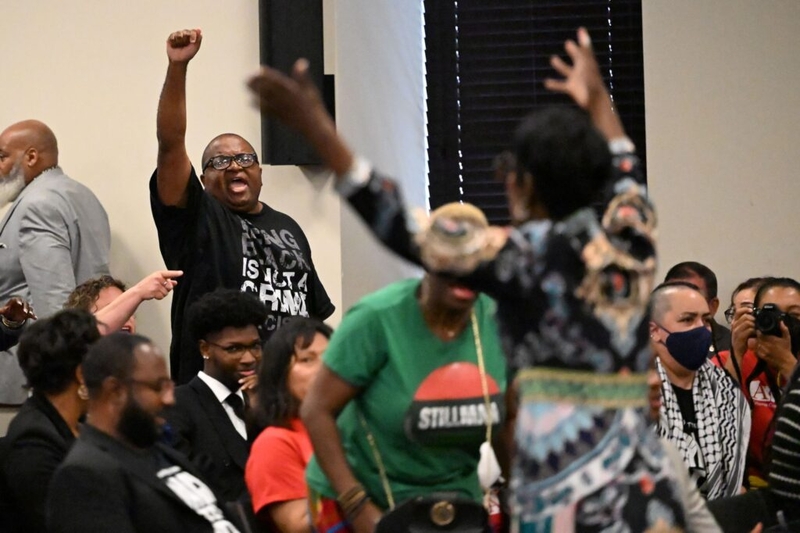
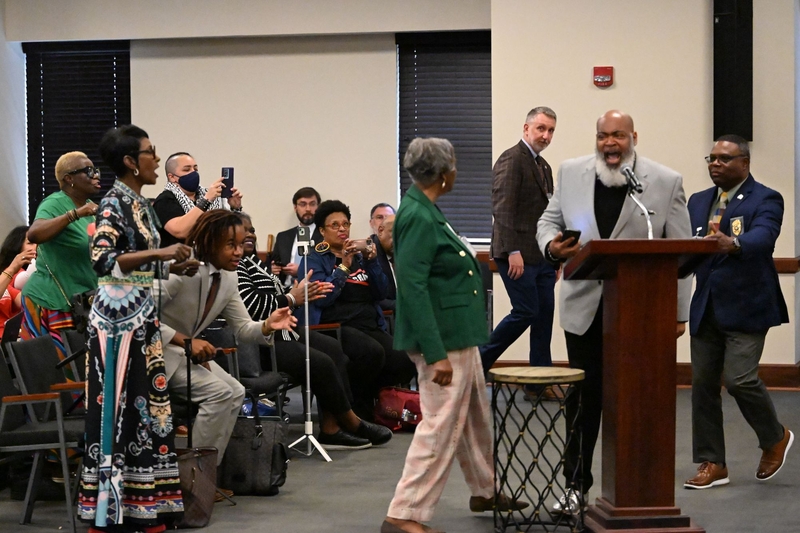
Activist Travis Jackson (back, with fist raised) leads chants against a primary bill in a House committee on May 7, 2026 at the Alabama Statehouse in Montgomery, Alabama. Rep. Juandalynn Givan, D-Birmingham (foreground, in patterned dress) joins in the protest. House and Senate committees moved two bills that would reschedule primaries should courts allow the state to use congressional and legislative maps previously ruled discriminatory. (Brian Lyman/Alabama Reflector)
Two bills that could change primary elections in Alabama — should federal courts allow the use of congressional and legislative maps previously ruled discriminatory – moved closer to passage Thursday, but not without major protests erupting in legislative committees.
HB 1, sponsored by Speaker Pro Tempore Chris Pringle, R-Mobile, and SB 1, sponsored by Sen. Chris Elliott, R-Josephine, would respectively allow new primary elections for congressional districts and two state Senate districts in Montgomery. Both would take effect if the U.S. Supreme Court lifts an injunction preventing the state from redrawing congressional maps before 2030 and if a federal appeals court reverses a ruling from last year ordering the redrawing of the Senate districts.
Sen. Greg Albritton, R-Atmore, who carried the bill, said that the legislation itself does not alter the map.
“This is a relatively short bill, and it does nothing more than set up a conditional procedure, a means whereby the state of Alabama can comply with court orders and with law,” Albritton said. “Nothing will occur with this bill when it passes, until or unless there’s continued action in the courts.”
Other Republicans on the committee did not speak, other than to make procedural motions to advance the bill.
The prospect led to protests in both committees Thursday, with members of the audience chanting “No Justice No Peace” and “End White Supremacy” during the proceedings.
Sen. Rodger Smitherman, D-Birmingham, who does not sit on the committee, told lawmakers that the state is going back on its word. In August, the state was ordered not to redistrict until 2030, which the state agreed to.
“Why was the state in the court last week essentially going back on his word?” Smitherman asked. “Walk a mile in our shoes.”
If the Supreme Court overturns the 2030 injunction, the state would revert to a 2023 map approved by the Legislature that federal courts later ruled to be racially discriminatory. Alabama’s 2nd Congressional District, drawn by a court, would be the most affected; the Black Voting Age Population (BVAP) would drop from 48.7% to 39.9%. That would likely make the district, currently represented by U.S. Rep. Shomari Figures, D-Mobile, Republican-leaning.
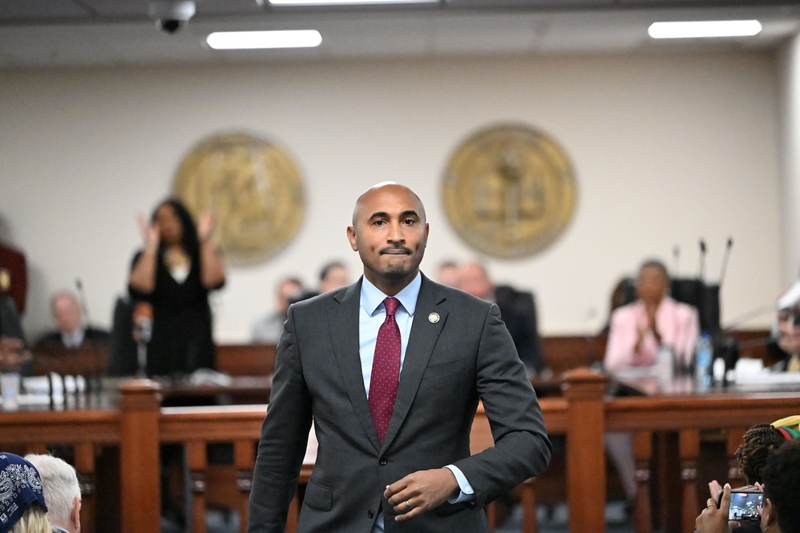
Figures, who was elected after a federal court ruled that the Legislature failed to draw a racially fair congressional map for the second time in 2023, said that if the map reverts to the Legislature’s 2023 map he is not worried about his job.
“I ran into a gentleman last night. He said, ‘Hey, man, your job is on the line.’ And I told him ‘No, Shomari Figures is going to be okay. Your voice is on the line,’” he said.
If the orders are dissolved or overturned after the May 19 primaries or June 16 runoffs, those results would be nullified and new elections would take place. There would not be runoffs for the new primaries.
Secretary of State Wes Allen and Attorney General Steve Marshall sought to have the injunction removed and the state Senate ruling reversed last week after the U.S. Supreme Court significantly weakened a key part of the Voting Rights Act in a case known as Callais v. Louisiana. However, the court said that its ruling did not not affect Allen v. Milligan, a 2023 Supreme Court case that led to the state’s current congressional district map.
‘Stop white supremacy’
The Senate County and Municipal Government Committee approved HB 1 on a party line 6-3 vote after a public hearing, which was met with chants of “Stop white supremacy” and “Stop the confederacy” from the audience.
Jerome Dees, policy director for the Southern Poverty Law Center, argued that nothing in the Callais decision “erases Alabama’s liability nor authorizes this Legislature to resurrect a map that a federal court found was intentionally designed to diminish Black voting power.”
“This week’s attempt at doing so not only tries to disturb settled law, but also directly defies a federal court order grounded in the explicit findings of unconstitutional discrimination,” he said.
On Wednesday, the Senate rushed the passage of SB 1 due to flooding and a fire alarm that caused the evacuation of everybody in the building. Sarah Colletti, a resident of Senate District 3, said she saw that as divine intervention.
“I too felt like yesterday’s flooding was a message from God,” she said. “I don’t want fire to break out. I live here, so I’m really hoping, and I’m begging and I’m praying that y’all will join us in attempting to put out this fire and restore order. Those of you holding the matches, I have faith that our Lord will remember you on Judgment Day.”
Debra Jackson, a resident of Senate District 2, said that all men should be created equal, but that has not been her observation through Alabama’s history.
“My ancestors, since 1619, or for 407 years, have survived slavery, the Civil War, reconstruction, Jim Crow, lynchings. Jim Crow 2.0, which is now gutting of the Voting Rights Act, now the civil rights with this redistricting,” she said. “I mean, what crime did we commit? That’s what I want to know. What crime did we commit for you all to take the few representatives that we have?”
‘We are on the move now’
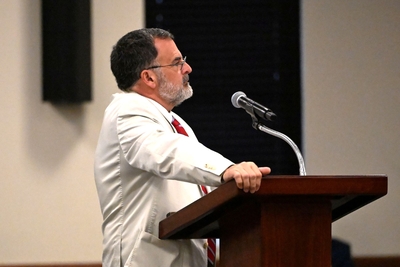
In the House Ways and Means General Fund Committee Thursday, Speaker Pro Tempore Chris Pringle, R-Mobile, who carried SB 1 in the House, said he believed the federal court got the ruling on state Senate districts wrong.
“They ruled that racial gerrymanders were unconscious, a violation of the Voting Rights Act, the reason why they undid Louisiana (v. Callais), we believe that this was a clear racial gerrymander, and all we have done is ask the court to reverse it,” Pringle said.
The bill was approved by the committee with all House Democrats voting against the bill. Members of the public strongly opposed the legislation.
“When I look at where we are now, you have a supermajority, but it’s not enough,” Rep. Pebblin Warren, D-Tuskegee said. “You can do anything you want to, and to see that you want more, makes me personally feel that you don’t want me.”
“I don’t think anything that I say is going to change hearts and minds, especially those intent on denying black Alabamians fair representation,” said Letetia Jackson a plaintiff in the Allen v. Milligan case. “I ask, why are some so intent on silencing the voices of black voters? Why are some, why is it so important that we have no voice, no representation?”
Dev Wakeley, a worker policy advocate for Alabama Arise, told committee members the Legislature has been “terrible to Black voters.”
“We’ve seen immediate response when it comes time to eliminate a Black opportunity district in this state, but we see no response when it comes time to allow folks to participate in democracy by voting absentee without providing a particular reason for doing so, or for voting absentee or for voting early,” he said.
Protests began in earnest after Wayne Taft Harris, a pastor and communications director of Black Lives Matter Birmingham, spoke to the committee about a conversation he had with seminary students. After Taft spoke, members of the audience chanted “no justice, no peace” and “end white supremacy.” One protester was removed by security because Rep. Rex Reynolds, R-Huntsville, said she was preventing the public hearing from moving forward.
“I informed them the lynching tree is now the legislative chamber, that Jim Crow is now bathed in legal language that white supremacy is sitting up here wearing Alabama pins, that democracy is once again being dragged to death on the back of somebody’s pickup truck with a flag. Violence with neck ties on and lipstick,” he said.
Hall called for the committee to reject the bill and said the Black community will continue to fight against the legislation.
“I want to tell the state of Alabama, I want to say to the people of America and the nations of the world that we are not about to turn around,” he said. “We are on the move now. Yes, we are on the move. And no wave of racism, None can stop us.”
Speaking to the Senate committee, Figures urged senators to not forget about Alabama’s history, and to give Black Alabamians honor and respect.
“We deserve that representation, that progress that we speak of, that was progress that was led by Black people, not exclusively, certainly there were white allies in that struggle, but it was led by Black people. And to remove that opportunity, something that I think is not wise to do, something that I think is not responsible to do. We deserve that opportunity,” Figures said. “We deserve as Black people, a fair opportunity on more than just the football fields of Tuscaloosa and Auburn.”
The committee approvals set up both pieces of legislation for final passage on Friday when both chambers convene at 9 a.m.
Updated at 3:08 p.m. to include a quote from Taft and clarify when the protests began.
Montgomery