Alabama House sends bill increasing penalties for eluding police to Gov. Kay Ivey
Apr 03, 2026 | 7:59 am ET
Description
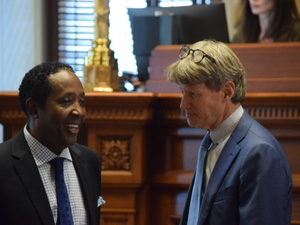
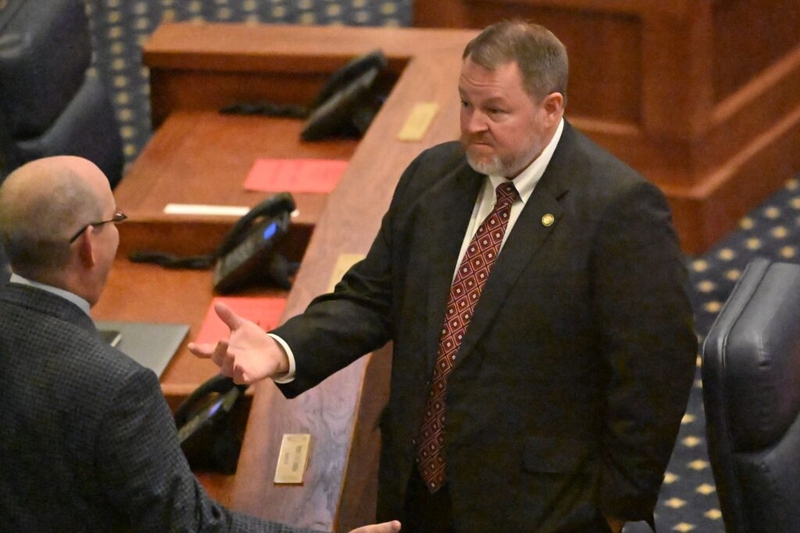
Sen. Lance Bell, R-Pell City (right) speaks with Sen. Clyde Chambliss, R-Prattville (left) on the floor of the Alabama Senate on March 3, 2026 at the Alabama Statehouse in Montgomery, Alabama. The Alabama House of Representatives Thursday gave final approval to a bill sponsored by Bell to increase penalties for eluding law enforcement. (Brian Lyman/Alabama Reflector)
The Alabama House of Representatives Thursday passed a bill that increases penalties for eluding a police officer.
SB 233, sponsored by Sen. Lance Bell, R-Pell City,elevates the base punishment from a Class A misdemeanor, punishable by up to a year in jail, to a Class D felony, punishable by up to five years in prison.
“This is the same bill we passed, the only difference was the Senate sent it down to lessen the offence of attempting to elude on foot,” Rep. Reed Ingram, R-Pike Road, said Thursday.
Ingram, who carried the bill, sponsored a House version of the bill that passed the House on a 103-0 vote in February. Ingram’s bill would have also increased the penalty for eluding law enforcement from a Class A misdemeanor to a Class D felony.
Under the bill, an individual will be charged with the Class D felony if they intentionally flee from an officer while operating a motor vehicle on a highway, road, alley or street. Individuals would be charged with a Class A misdemeanor for eluding an officer on foot if they know the officer is attempting to make an arrest.
The bill passed 80-15 over objections from some Democrats.
Rep. Napoleon Bracy, D-Prichard, raised concerns about knowing who is a police officer when officers could be in plain clothes.
“You do have stuff like MACS [Metro Area Crime Suppression] where you have these officers that are working maybe, like, a drug task force or something like that. How would a person know if that’s a person because you may be running, you may think you’re being robbed by a rival whatever it is that you’re into?” he said during debate.
Other House Democrats cited the history of police brutality against Black Americans. Rep. Juandalynn Givan, D-Birmingham, said in her community, teenagers don’t feel protected by the police.
“In their community, they’re targeted. In their community, they feel as if law enforcement officers are the bad cops instead of the good cops because they feel as if they’re profiled,” she said on the House floor.
Givan also listed the names of Tamir Rice, Sandra Bland, Michael Brown and George Floyd, Black Americans who were killed by police officers.
“Yes, we applaud those gentlemen who came in here today, but are we really looking at the systemic issues that plague us to why people fear law enforcement?” Givan asked.
When asked by Bracy if he understood why Democrats were opposed to the bill, Reed said he understood where they were coming from.
“I think that you feel like maybe in the past, that there may have been some profiling,” he said. “And I don’t doubt — I’m not saying yes or no — that there may have been some profiling and this bill is not about profiling, this bill is about the facts.”
If signed, the bill will go into effect Oct. 1. It goes to Gov. Kay Ivey.
Montgomery