Advocates push state to hold public hearing on opioid settlement spending
Nov 04, 2026 | 5:23 pm ET
Description
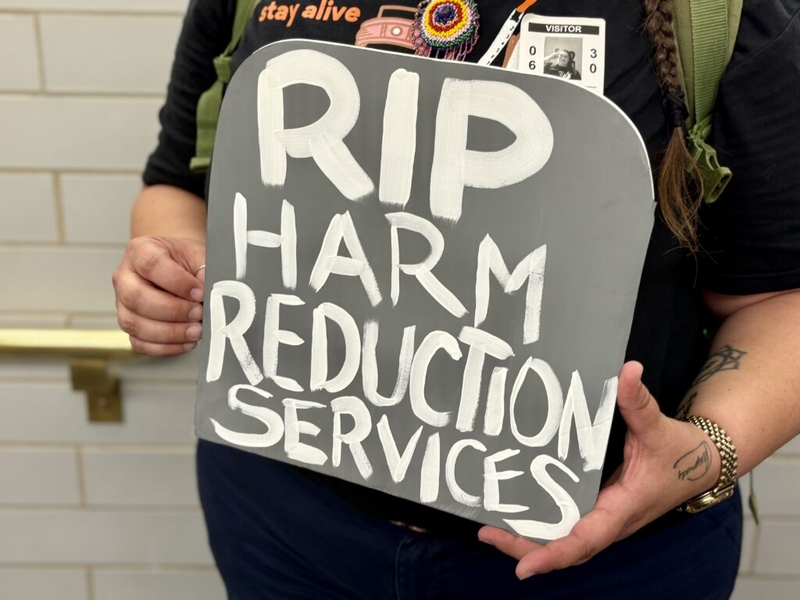
Harm reduction advocates staged a die-in at the Trenton Statehouse on Monday, June 30, 2025, after legislators — fearing federal Medicaid cuts would hurt hospitals — decided to divert $45 million in national opioid settlement funds to four of the state's largest hospitals. (Photo by Dana DiFilippo/New Jersey Monitor)
Advocates for people whose lives have been battered by addiction want New Jersey officials to host a hearing on the use of opioid settlement funds in the wake of reports that money is being squandered by some local governments on community events or police programs that do little to address the problem.
The New Jersey Harm Reduction Coalition joined 50 treatment and advocacy organizations and 100 individuals in a request Tuesday urging the state Department of Human Services to schedule a public hearing to gather input on state oversight of the settlement money.
Jenna Mellor, the coalition’s executive director, said the state has the power to better protect these critical funds.
“It’s time for the state to step up and get a handle on these settlement funds. This public hearing request makes clear that people all over the state care about how these dollars are spent, and they want the state to lead,” she told the New Jersey Monitor.
New Jersey is set to collect $1.1 billion through 2038 from drug makers, distributors, and pharmacies as part of a series of multistate lawsuits. Half is controlled by the state and the rest is distributed to participating towns and counties.
The state has spent more than $100 million to expand access to treatment, housing, and other services, including harm reduction work to distribute the opioid-reversal agent naloxone, or Narcan. But a government watchdog flagged questionable spending among some municipalities, state lawmakers diverted $45 million from the fund for hospital aid, and recently released reports show counties and towns spent millions from the settlement to fund concerts, parties, and police equipment.
“We have more than enough evidence that local governments need clear guidance, and without that, millions of dollars are getting wasted at best, and going towards punishing people who need care at worst,” Mellor said.
The request comes just weeks after advocates told lawmakers that greater oversight and stricter guardrails are needed to protect this funding.
A state panel made up of treatment experts, prevention advocates, and people with first-hand addiction experience issued a strategic spending plan in 2025 that recommended the settlement dollars be invested in things like housing, treatment programs, family support services, and harm reduction. State allocations have largely followed this model and advocates say local governments should do the same.
“The use of opioid settlement funds has significant consequences for people and communities across New Jersey. These funds represent an opportunity to address the harms of the overdose crisis, support evidence-informed services, and invest in the community-based organizations that work directly with people affected by substance use,” the letter says.
The Department of Human Services did not comment on the request.
Trenton, NJ