Advocates, moms and lawmakers push for group prenatal care as Legislature weighs insurer issues
Sep 17, 2026 | 3:46 pm ET
Description
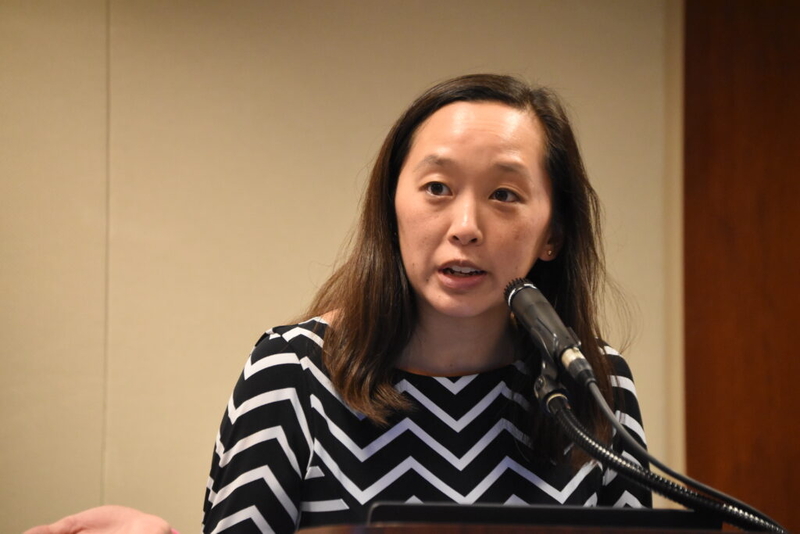
Sen. Stephanie Chang (D-Detroit) speaks about legislation requiring insurance coverage of group prenatal care at an event in Lansing. Sept. 17, 2026. (Photo by Katherine Dailey/Michigan Advance.)
As conversations continue on how to improve maternal and infant health in Michigan, representatives from the Centering Healthcare Institute on Thursday highlighted methods to improve pregnancy outcomes — among them being group prenatal care, through the organization’s Centering Pregnancy program.
The event was held at the downtown Lansing Center. The Michigan Department of Health and Human Services has partnered with Centering Pregnancy since 2024.
Michigan has the second-most Centering Pregnancy locations of any state, behind only California, with 39 licensed sites — more than double the amount of licensed sites in 2020.
Isadora Martinez, the Centering implementation advisor for Michigan, introduced the mission behind the Centering Healthcare Institute’s prenatal care program, which centers on group care for cohorts of expectant mothers at similar stages in their pregnancies.
“At the heart, Centering Pregnancy brings prenatal care, education, and peer support together in a group setting for people who are at similar points in the pregnancy,” Martinez said . “Instead of care being something that happens to participants, they are active partners in the process, they learn from the care team, from one another, and from their own experiences.”
Michelle Niles, a nurse consultant with the department, said that as the grant enters its fourth year, they hope to bring new Centering Pregnancy sites to Michigan and continue innovation at existing locations.
Meanwhile, Dr. Tisha S. Adams, the chief operating officer of Centering Healthcare Institute, which includes the Centering Pregnancy program, highlighted data on the impact of group prenatal care.
Nationally, rates of preterm births, law birth weights and NICU admissions have dropped, though in Michigan, the rates are largely similar to overall percentages for births in the state.
The idea of group-based pregnancy support, bringing a small group together who are due to give birth around the same time, bringing in that prenatal visits with childbirth classes, and allowing folks to really be so engaged in their own prenatal care and supporting one another, and that ability for individuals to be a part of a group and also have individual time with an on-site provider for their respective prenatal care, is so critical.
Rep. Jennifer Wortz (R-Quincy) and Sen. Stephanie Chang (D-Detroit) also gave remarks at the event, and pushed for the passage of a set of bills that would establish insurance coverage for programs like Centering Pregnancy.
One of those bills, SB 415, has already passed and been signed into law, which requires Medicaid coverage for group prenatal care services, defined as “not more than 12 prenatal care visits provided in a group setting that are based on an evidence-based model.”
HB 4704, which remains stuck in a House committee, had the same goal.
The other two bills — SB 414 and HB 4703, which each passed with bipartisan support in their respective chambers but remain in committee in the opposite chamber — would set the same standard for private insurance and “require an insurer that delivered, issued for delivery, or renewed in Michigan a health insurance policy to provide coverage for group prenatal care services.”
“As a mother of four children, I very much wish I would have the opportunities to have prenatal care when I was having my children 20 plus years ago,” Wortz said in a pre-recorded video. “Thankfully, I had a great support system in my family and my church family that came around and supported me when my kids were born, and I could ask questions and bounce up ideas too, and hear the struggles of other young moms, but a lot of people don’t have that, and I think that’s the beauty of what group prenatal care offers.”
Chang emphasized the importance of equity in prenatal care, making it accessible to low-income mothers by requiring Medicaid coverage, and addressing racial disparities that persist in metrics such as maternal deaths and low birth weights.
“The idea of group-based pregnancy support, bringing a small group together who are due to give birth around the same time, bringing in that prenatal visits with childbirth classes, and allowing folks to really be so engaged in their own prenatal care and supporting one another, and that ability for individuals to be a part of a group and also have individual time with an on-site provider for their respective prenatal care, is so critical,” Chang continued. “I recognize, as a mommy legislator, how important it is that that we give that space to pregnant people to build relationships with one another, and then also really address a lot of the topics that sometimes people are afraid to talk about or don’t know anything about, like postpartum depression, like breastfeeding, co-sleeping, healthy work-life balance, and much more.”
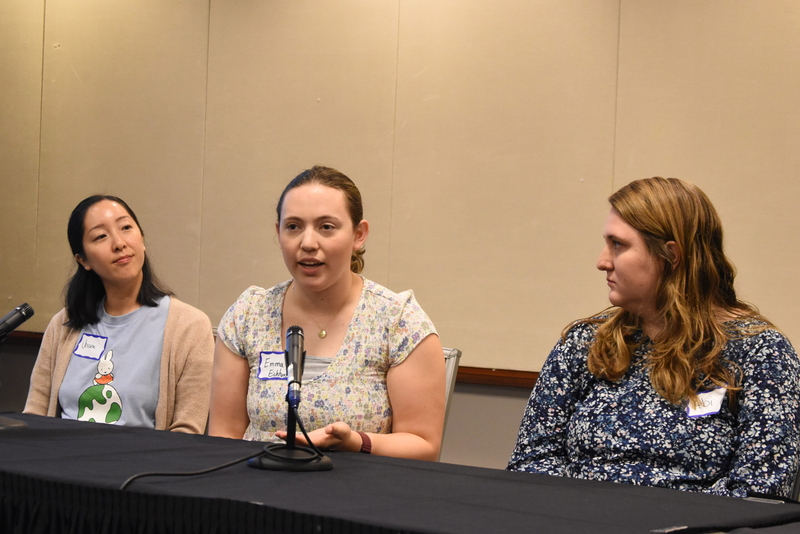
Five mothers, three who received group prenatal care in Ann Arbor and two who received group prenatal care in Haslett, each discussed their positive experiences with Centering Pregnancy, specifically around that sense of community and shared experiences of pregnancy.
Abi Kortum, who was part of a group in Haslett, said that, as a first-time mom, she had felt overwhelmed by the amount of information that she was seeing on social media about pregnancy and parenting.
Kortum was drawn to Centering Pregnancy by the ability to be with other moms who have a similar due date — she was in the hospital giving birth at the same time as one of the other moms in her group — as well as resources and education from the facilitators of the program.
Jessica You, who was part of a group in Ann Arbor, said she had just moved to Michigan from California and got pregnant recently after that.
“I didn’t know many people,” You said. “So this seemed perfect for me. I could make new friends and meet people at the same stage as me.”
Lansing, MI